Using Function Notation to Describe Rules (Part 1)
Student Summary
Some functions are defined by rules that specify how to compute the output from the input. These rules can be verbal descriptions or expressions and equations. For example:
Rules in words:
Rules in function notation:
- To get the output of function f, add 2 to the input, then multiply the result by 5.
- f(x)=(x+2)⋅5 or f(x)=5(x+2)
- To get the output of function m, multiply the input by 21 and subtract the result from 3.
- m(x)=3− 21x
Some functions are defined by rules that relate two quantities in a situation. These functions can also be expressed algebraically with function notation.
Suppose function c gives the cost of buying n pounds of apples at $1.49 per pound. We can write the rule c(n)=1.49n to define function c.
To see how the cost changes when n changes, we can create a table of values.
| pounds of apples, n | cost in dollars, c(n) |
|---|---|
| 0 | 0 |
| 1 | 1.49 |
| 2 | 2.98 |
| 3 | 4.47 |
| n | 1.49n |
Plotting the pairs of values in the table gives us a graphical representation of c.
Visual / Anchor Chart

Standards
8.F.1
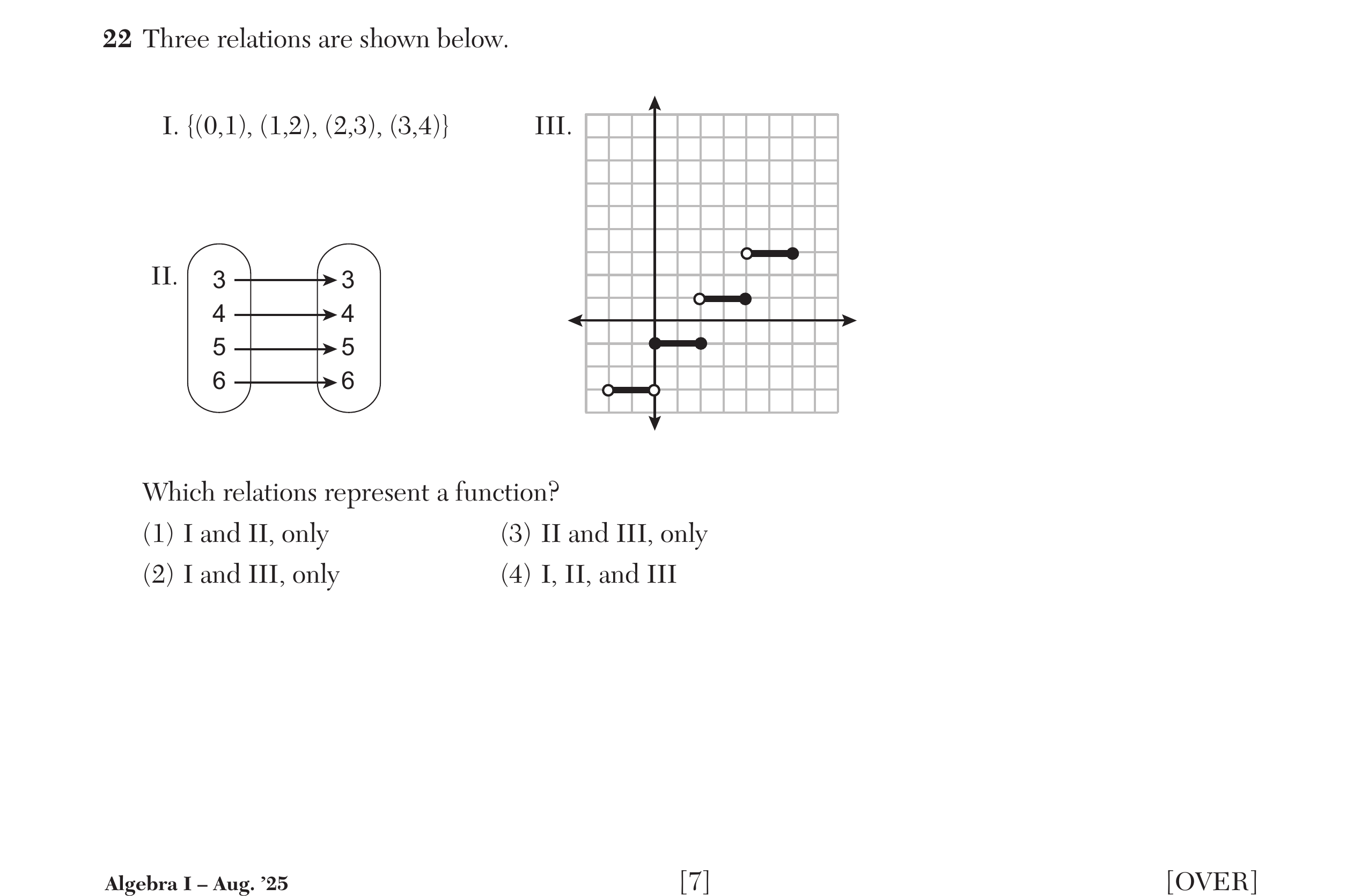
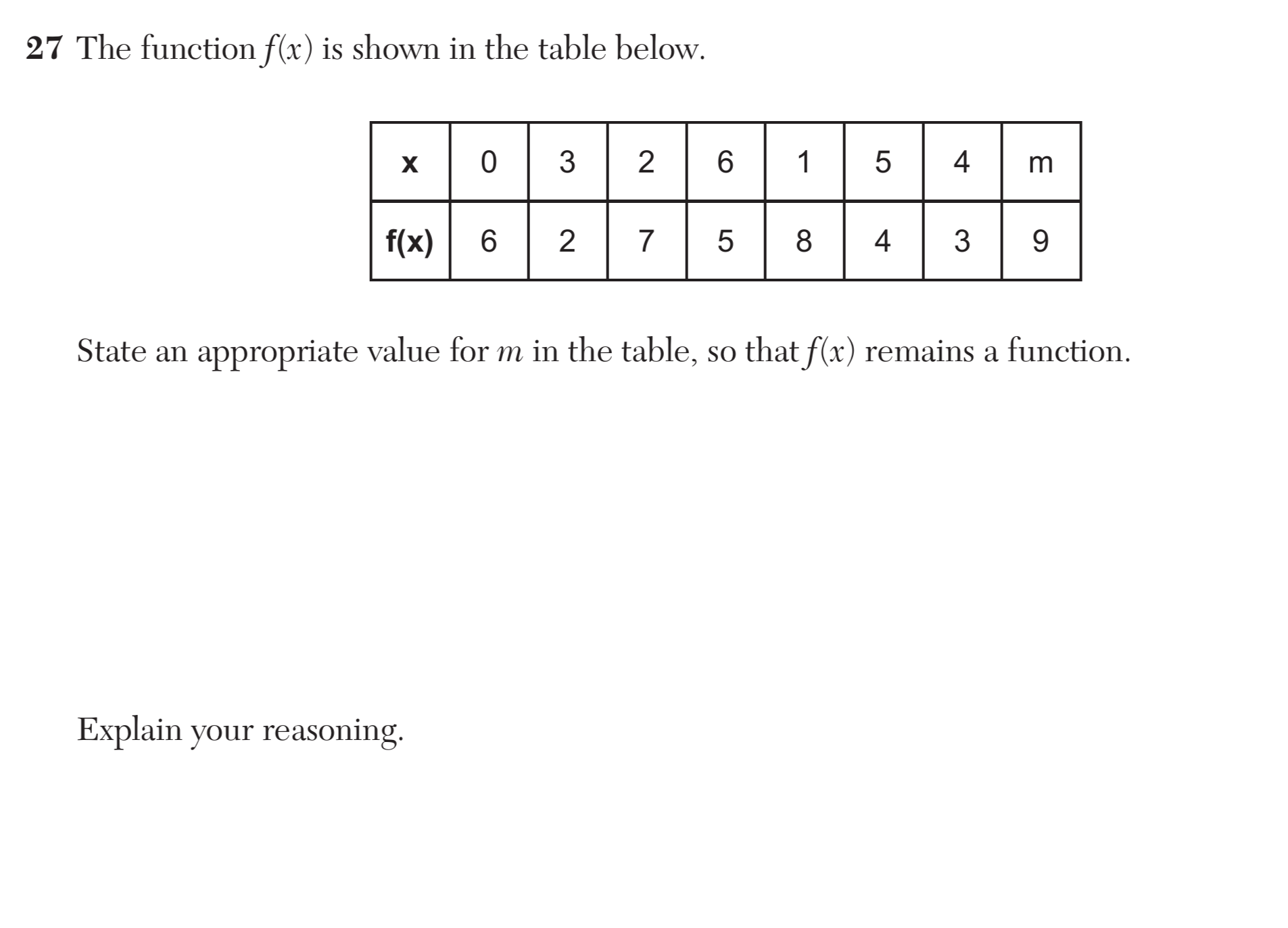
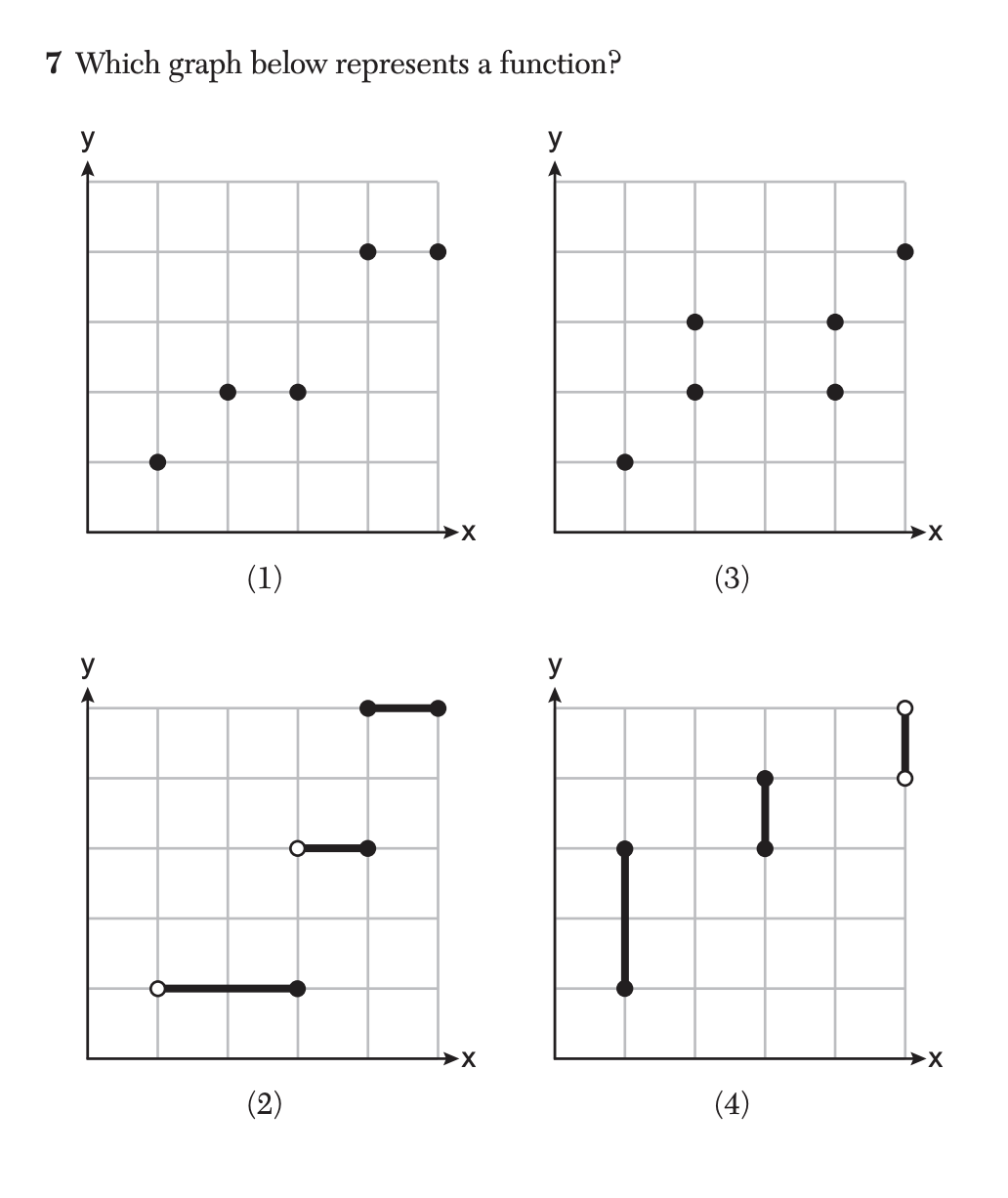
Understand that a function is a rule that assigns to each input exactly one output. The graph of a function is the set of ordered pairs consisting of an input and the corresponding output.
F-IF.25 questions
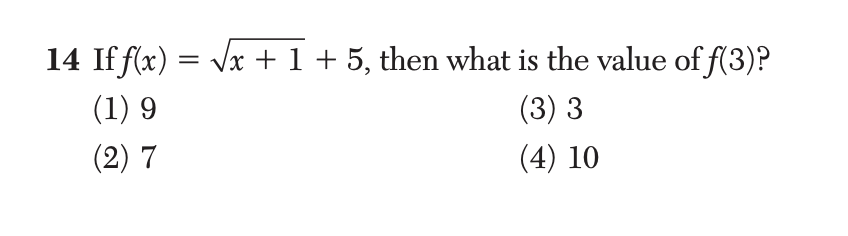
Use function notation, evaluate functions for inputs in their domains, and interpret statements that use function notation in terms of a context.




F-IF.17 questions
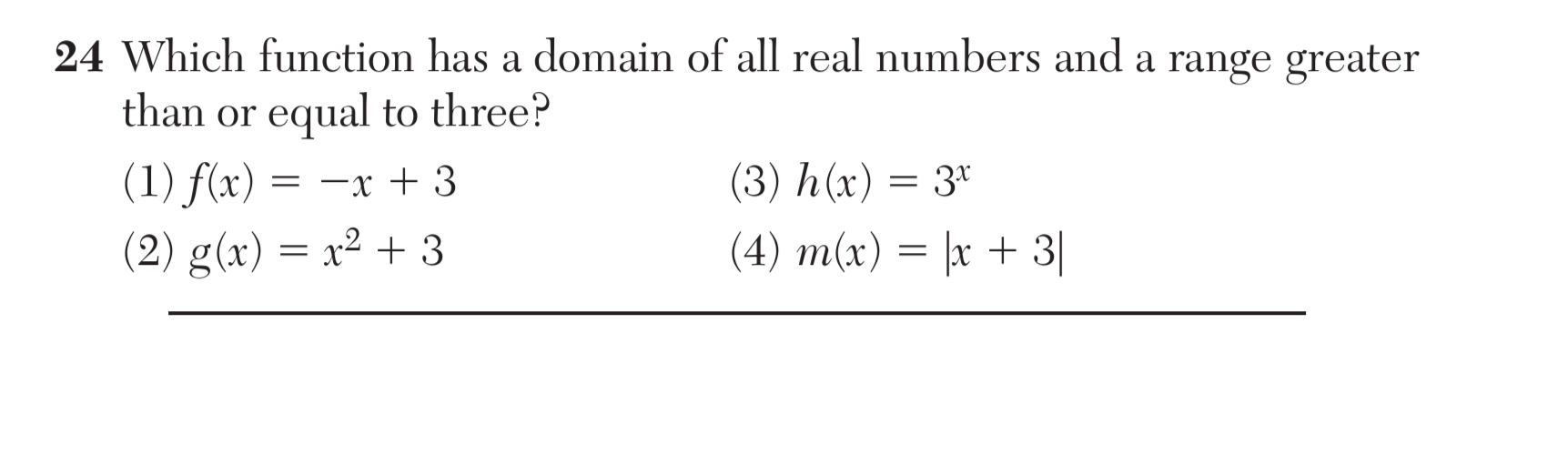
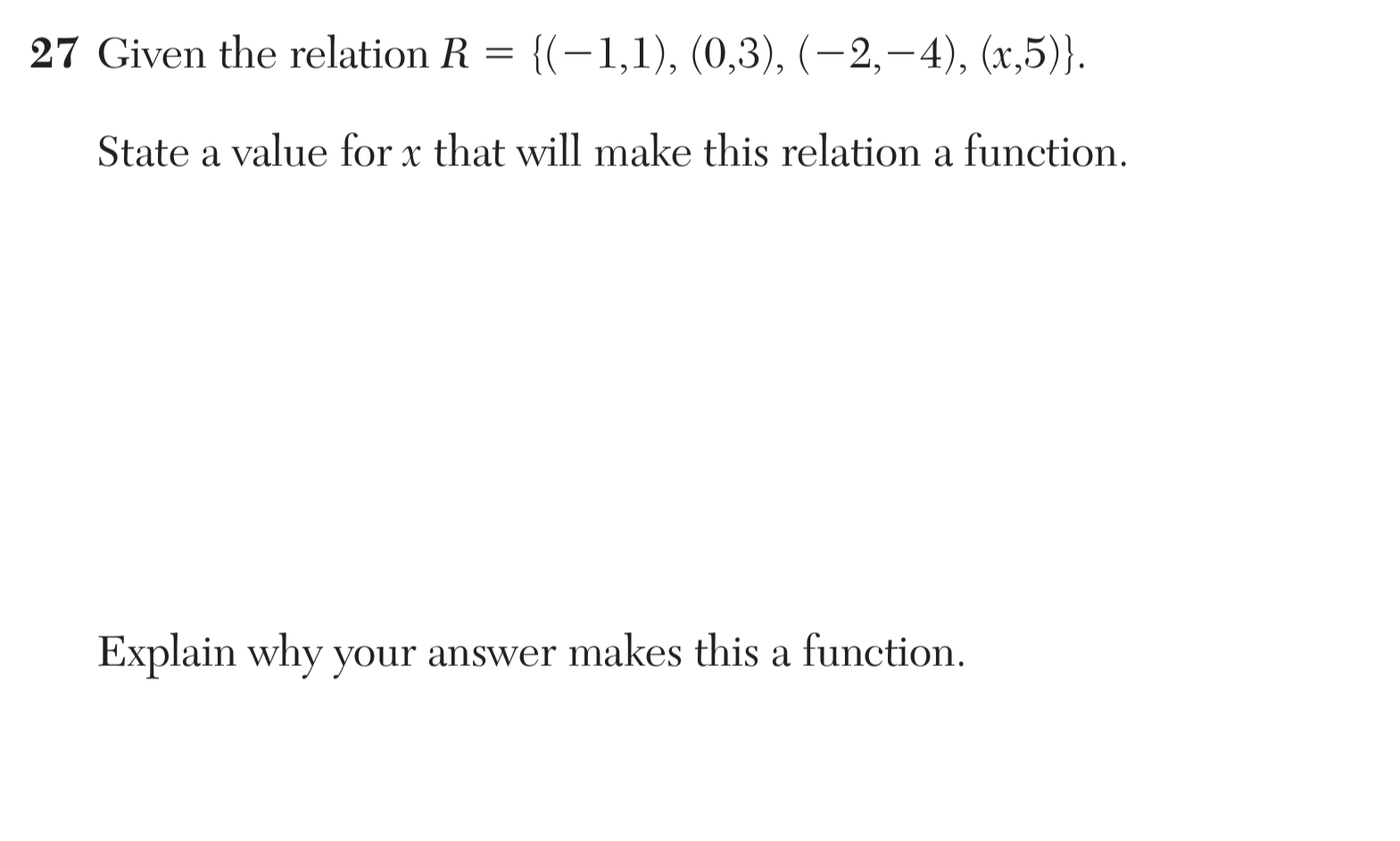
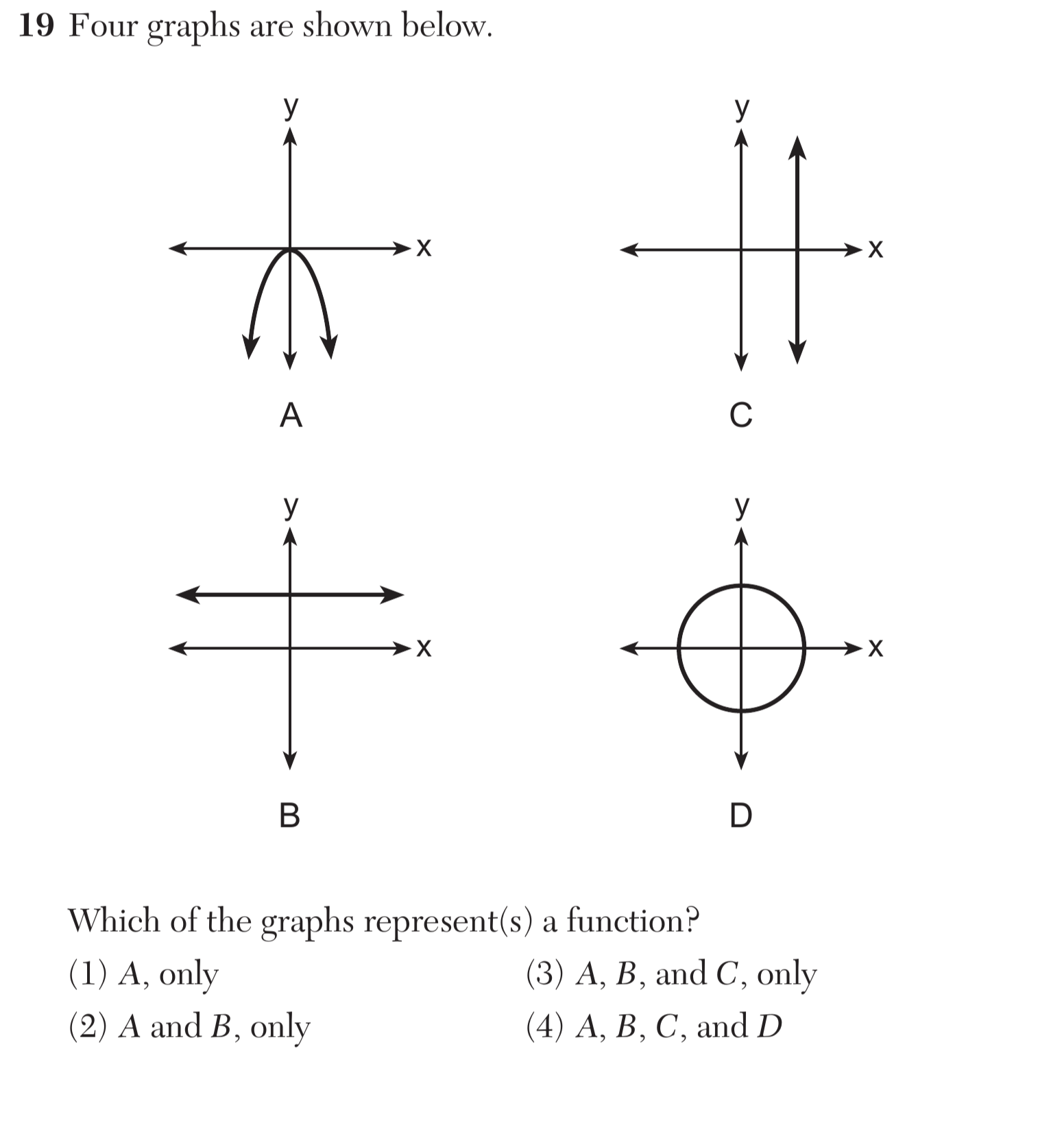
Understand that a function from one set (called the domain) to another set (called the range) assigns to each element of the domain exactly one element of the range.

F-BF.1.a
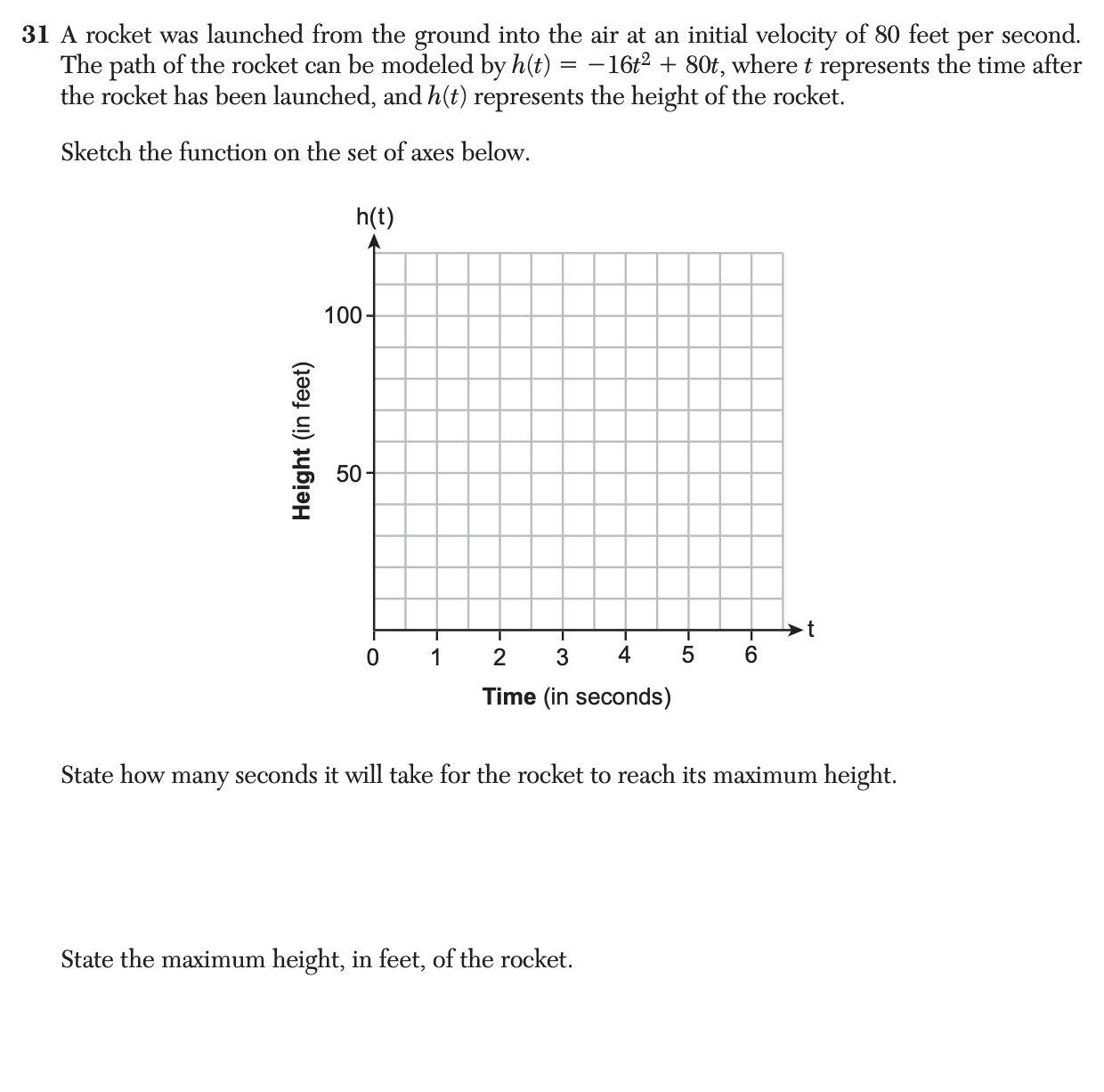
Write a function that describes a relationship between two quantities.
F-IF.45 questions
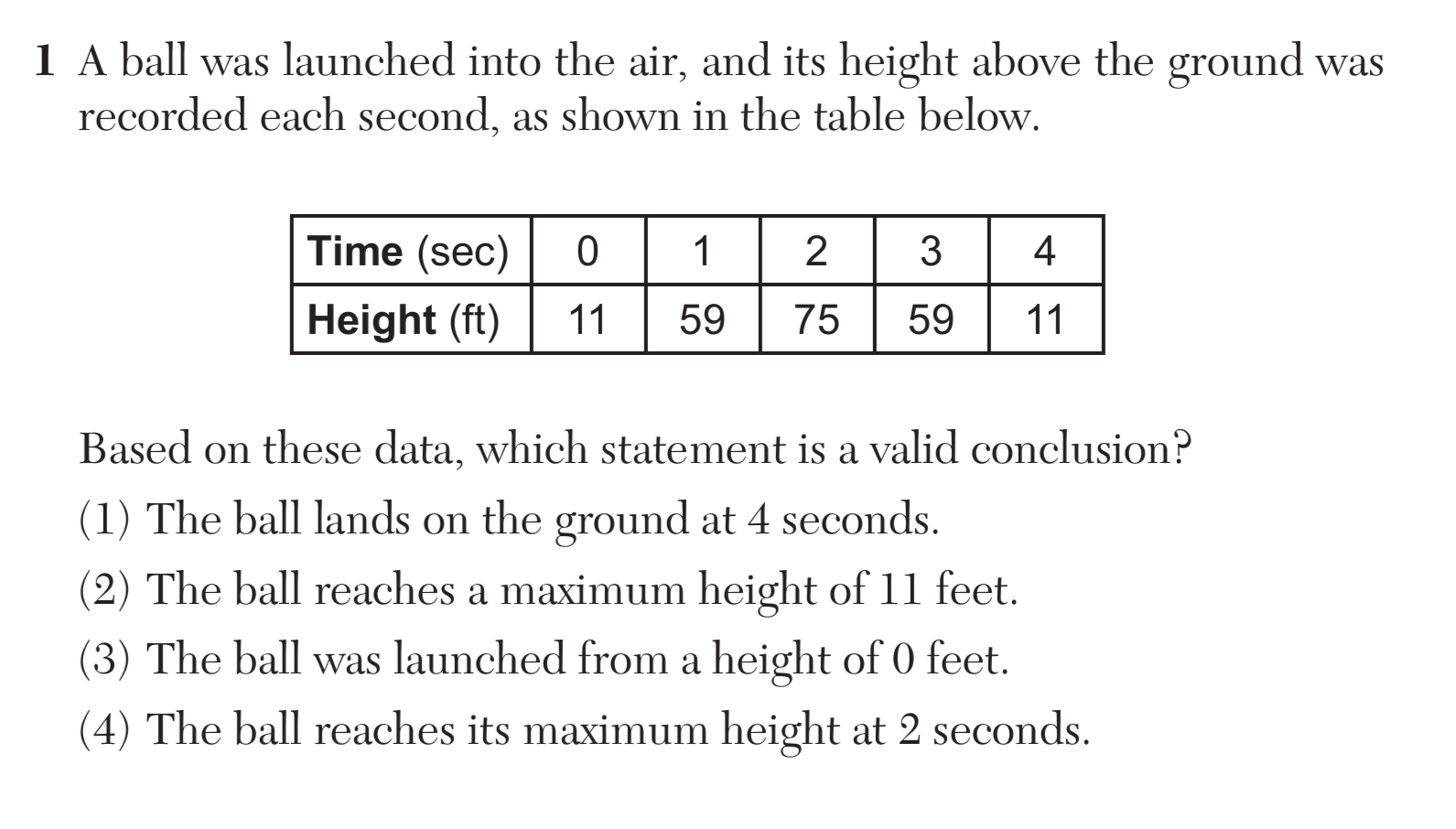
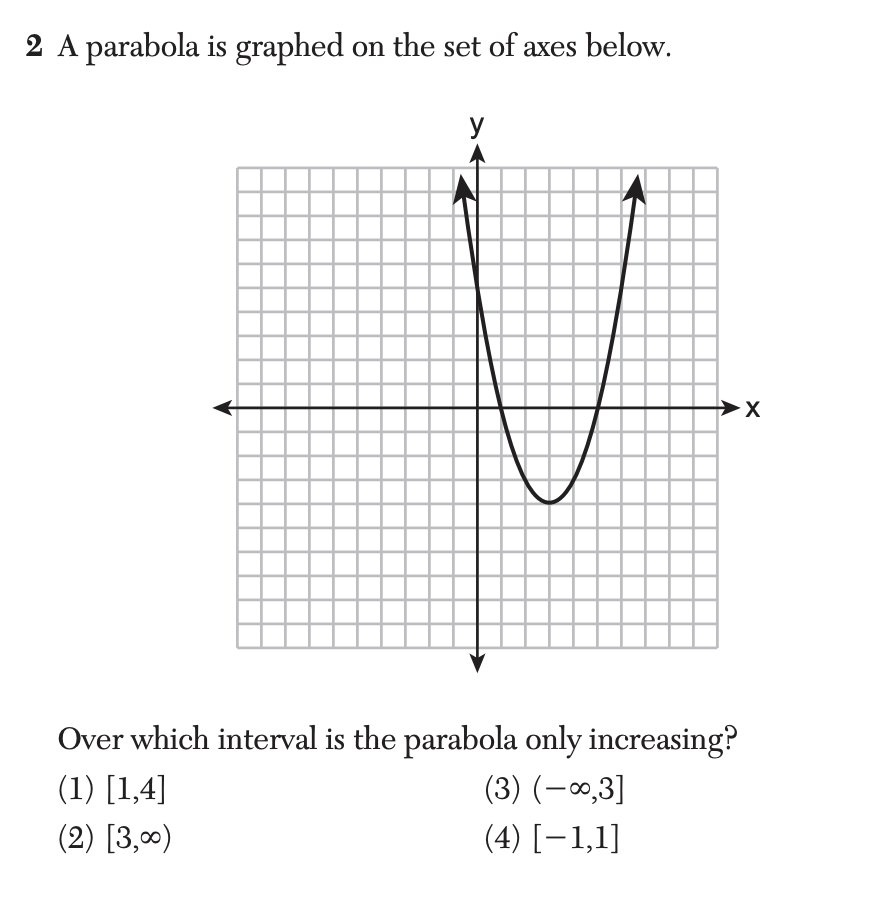
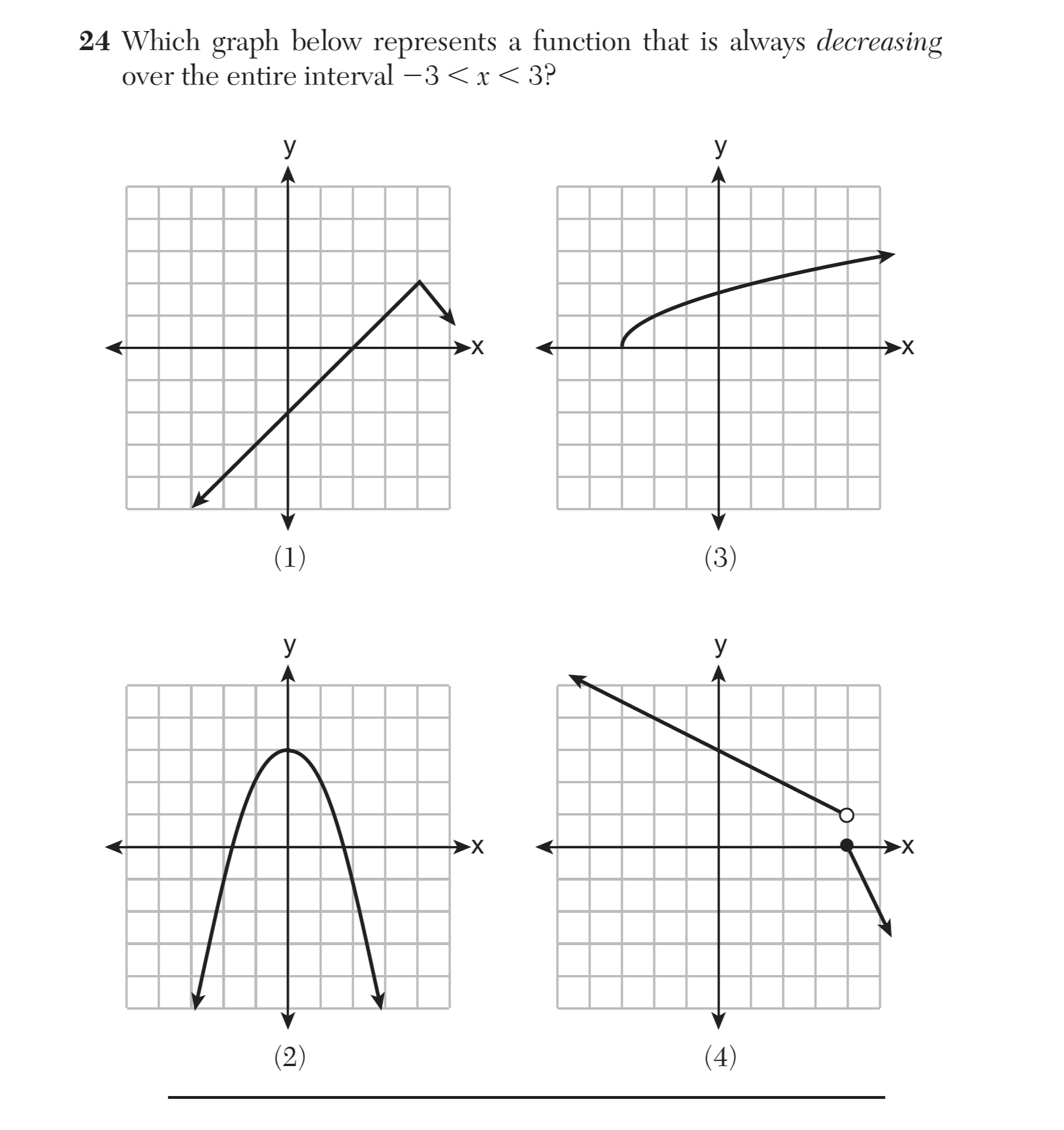
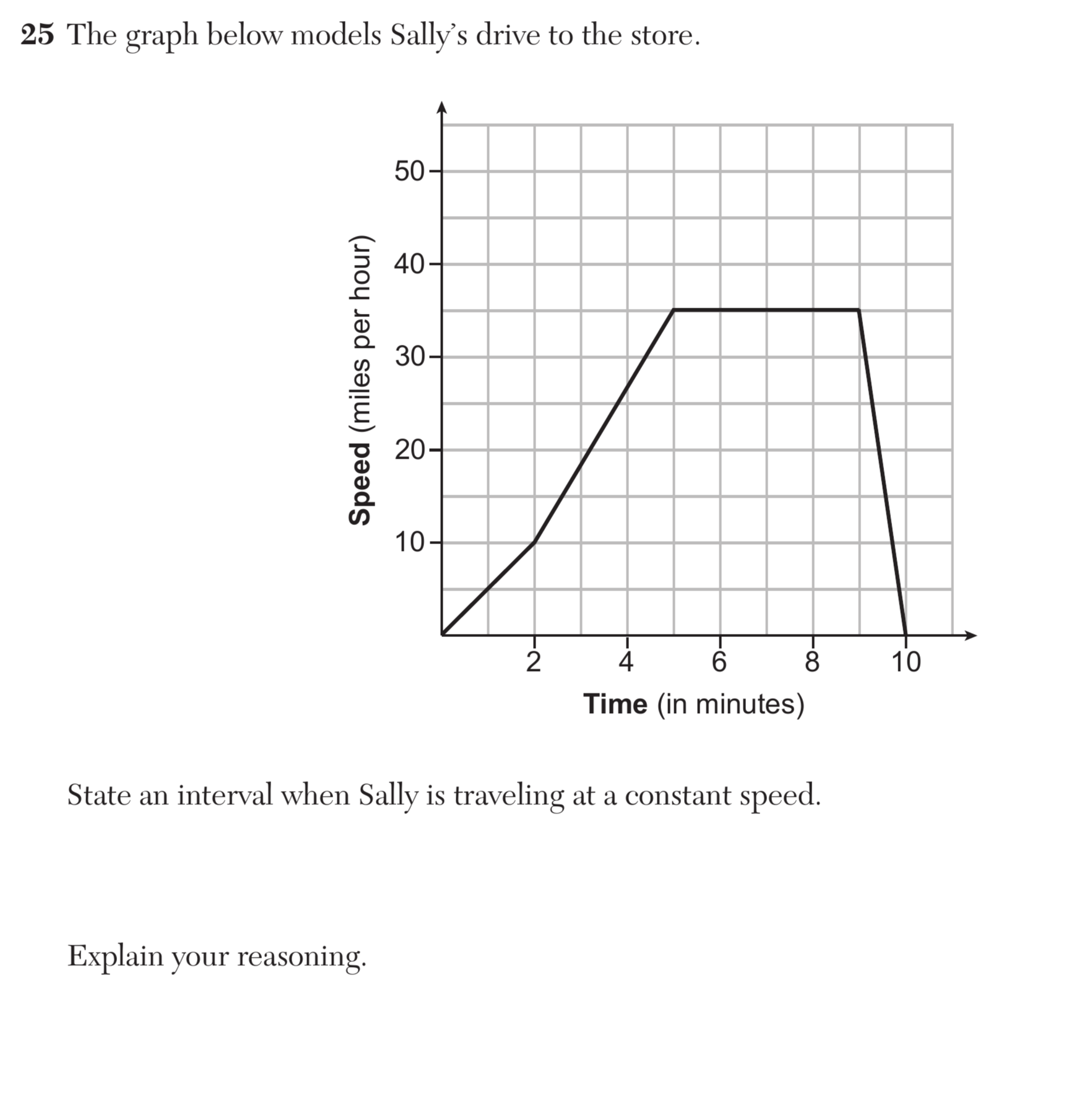
For a function that models a relationship between two quantities: i) interpret key features of graphs and tables in terms of the quantities; and ii) sketch graphs showing key features given a verbal description of the relationship.
F-IF.C
No additional information available.
F-BF.1
Write a function that describes a relationship between two quantities.