Using Negative Exponents
Student Summary
Equations are useful not only for representing relationships that change exponentially, but also for answering questions about these situations.
Suppose a bacteria population of 1,000,000 has been increasing by a factor of 2 every hour. What was the size of the population 5 hours ago? How many hours ago was the population less than 1,000?
We could go backward and calculate the population of bacteria 1 hour ago, 2 hours ago, and so on. For example, if the population doubled each hour and was 1,000,000 when first observed, an hour before then it must have been 500,000, and two hours before then it must have been 250,000, and so on.
Another way to reason through these questions is by representing the situation with an equation. If t measures time in hours since the population was 1,000,000, then the bacteria population can be described by the equation:
p=1,000,000⋅2t
The population is 1,000,000 when t is 0, so 5 hours earlier, t would be -5 and here is a way to calculate the population:
1,000,000⋅2-5 =1,000,000⋅251=1,000,000⋅321=31,250
Likewise, substituting -10 for t gives us 1,000,000⋅2-10 (or 1,000,000⋅2101), which is a little less than 1,000. This means that 10 hours before the initial measurement the bacteria population was less than 1,000.
Visual / Anchor Chart

Standards
8.EE.1
Know and apply the properties of integer exponents to generate equivalent numerical expressions.
A-SSE.1
Interpret expressions that represent a quantity in terms of its context.
F-IF.4
For a function that models a relationship between two quantities: i) interpret key features of graphs and tables in terms of the quantities; and ii) sketch graphs showing key features given a verbal description of the relationship.
A-CED.21 question
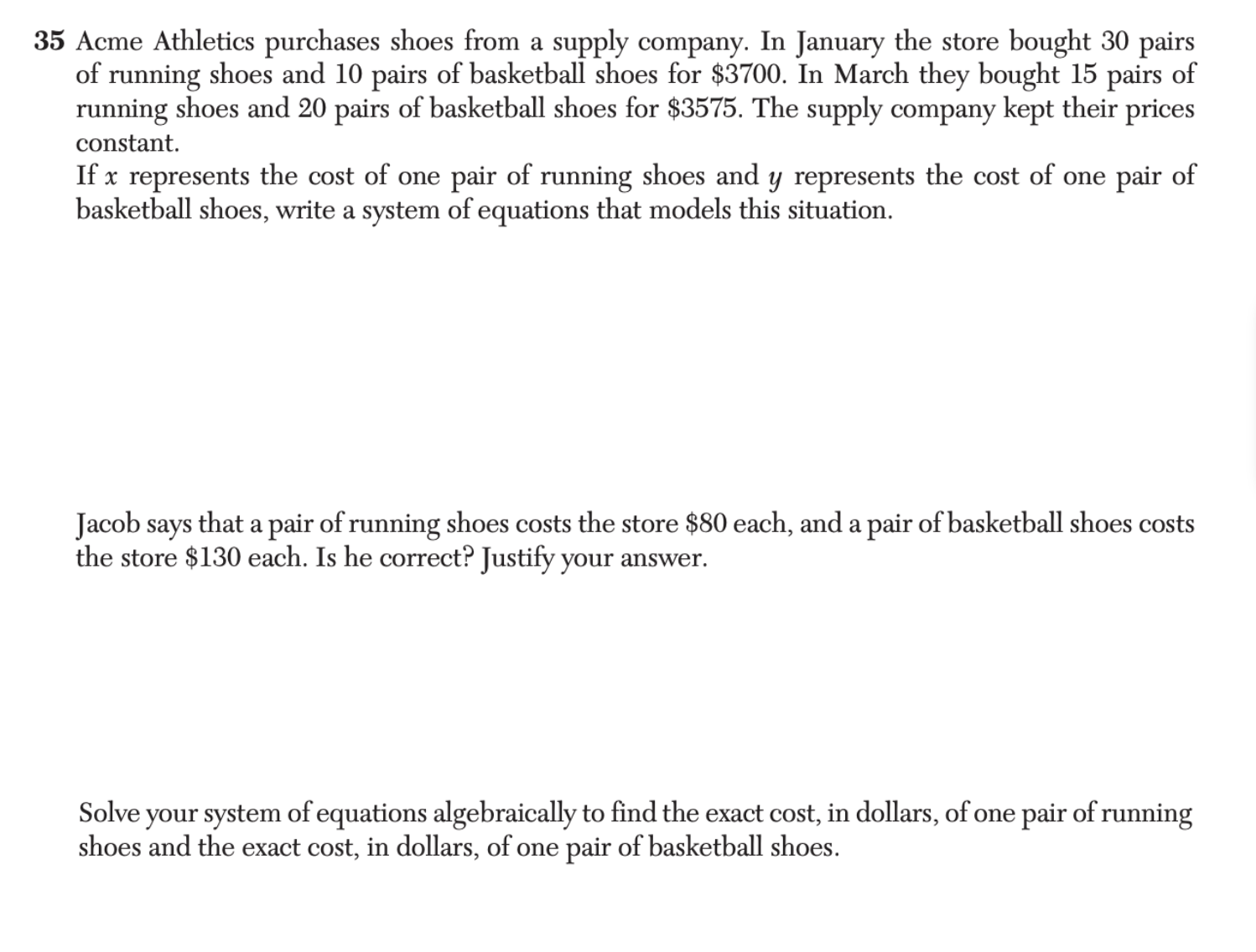
Create equations and linear inequalities in two variables to represent a real-world context.
HSN-Q.A.15 questions
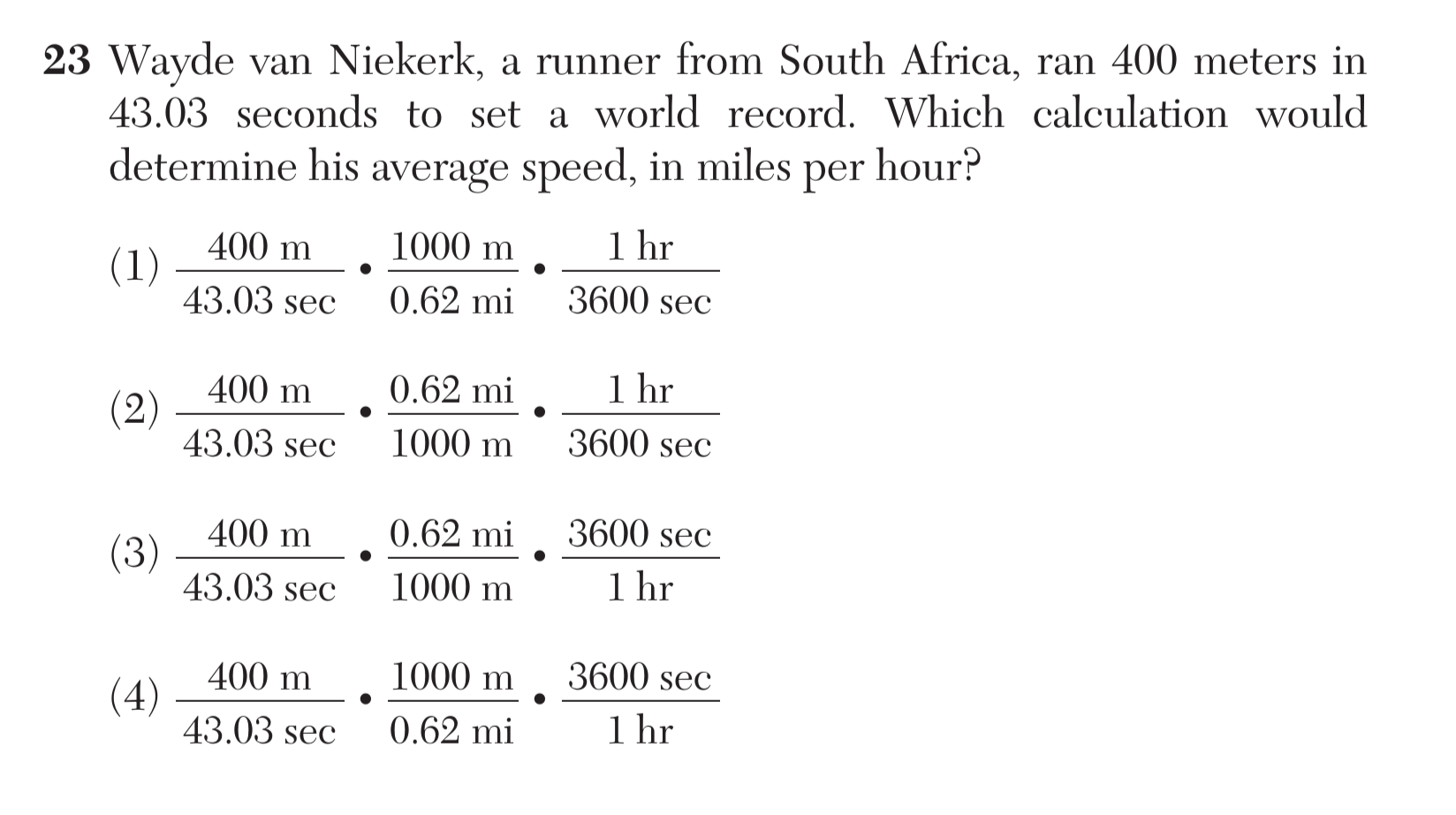
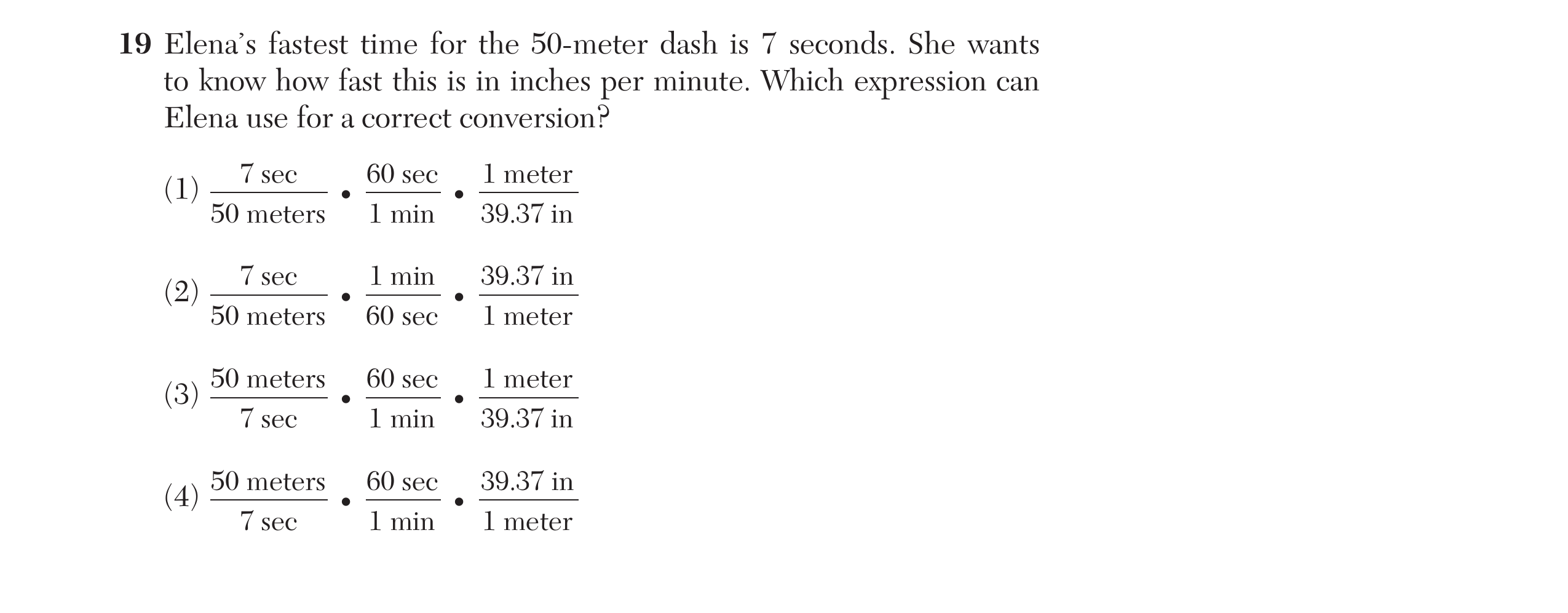
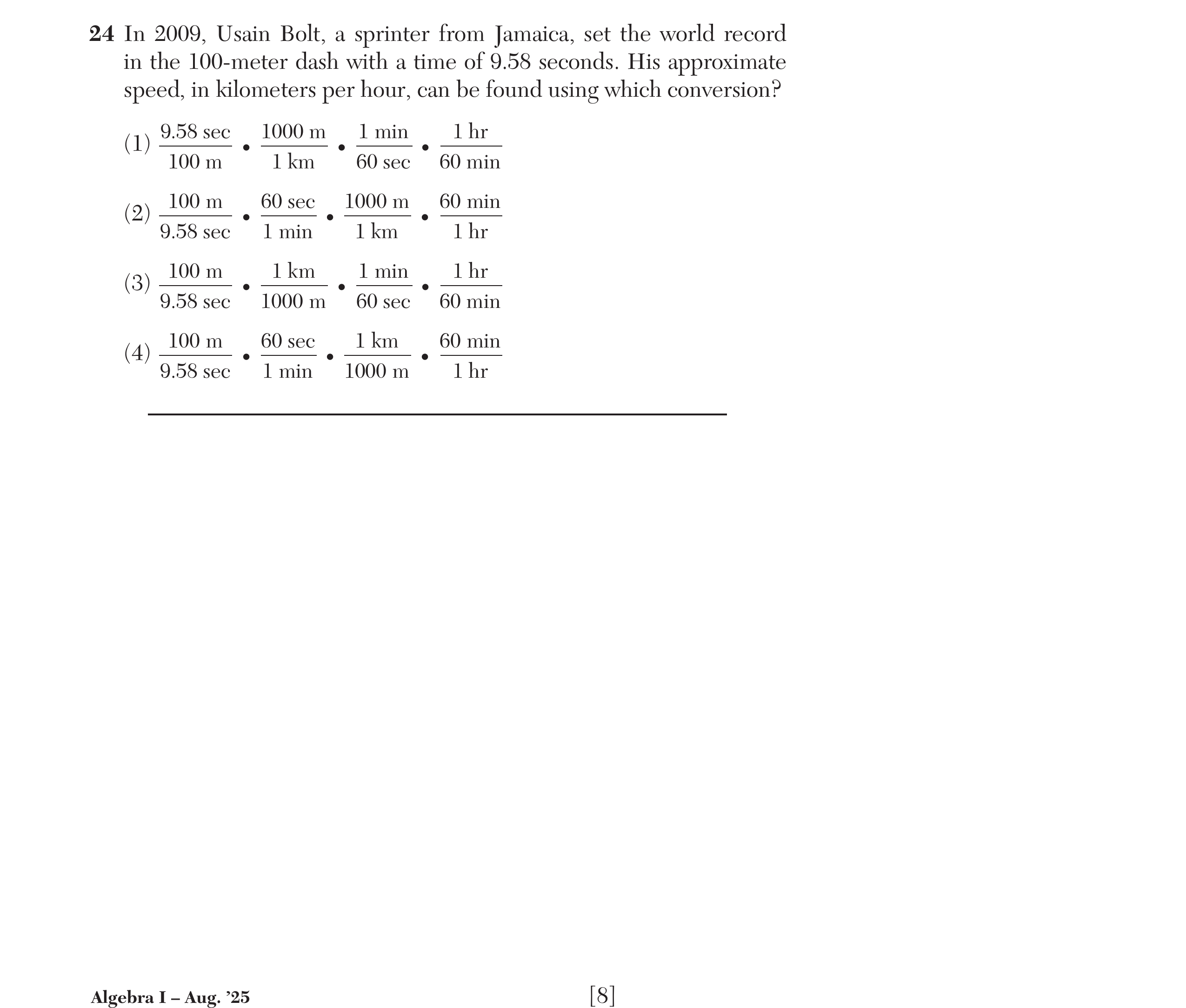
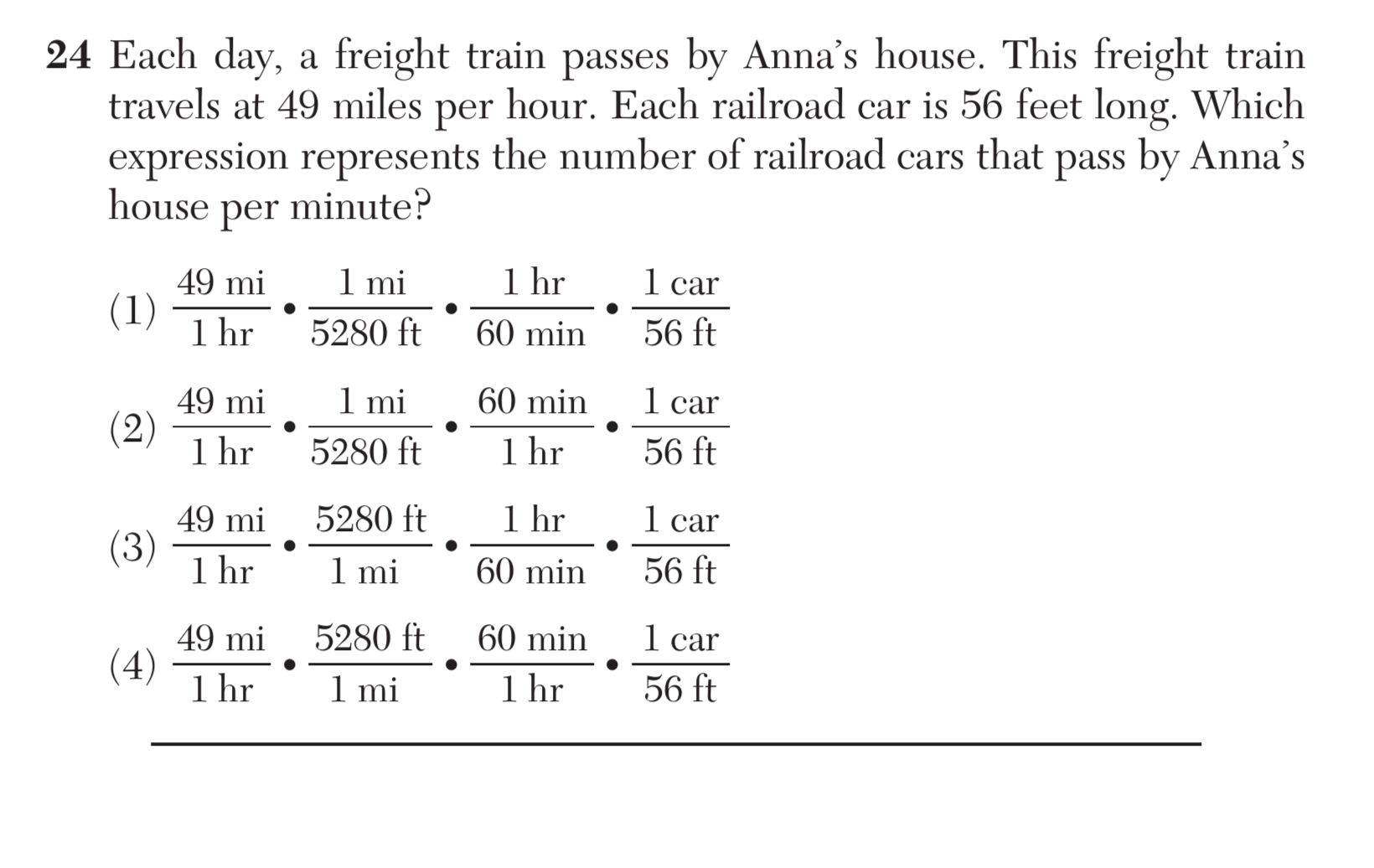
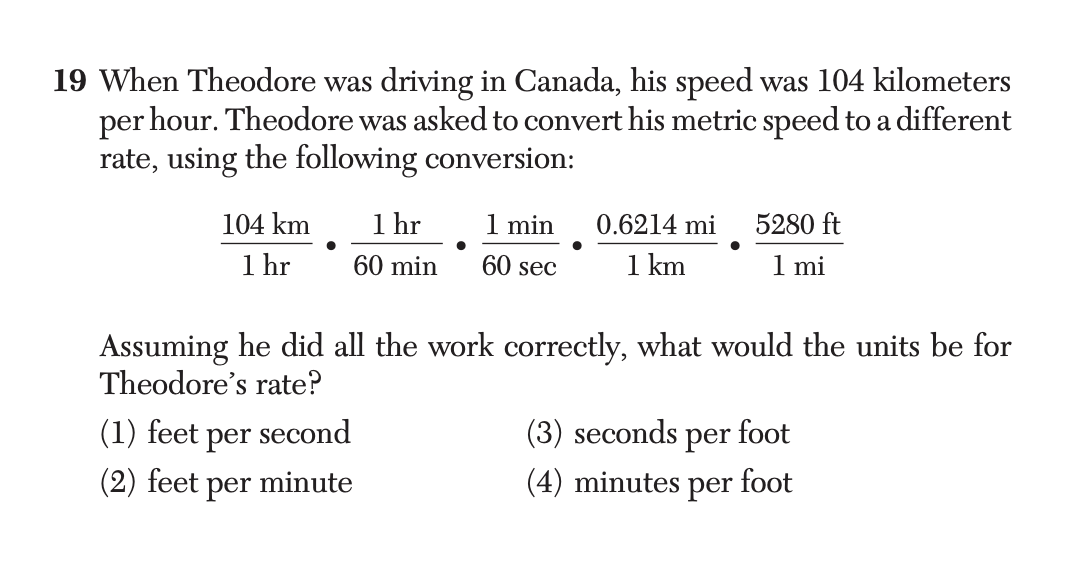
Select quantities and use units as a way to: i) interpret and guide the solution of multi-step problems; ii) choose and interpret units consistently in formulas; and iii) choose and interpret the scale and the origin in graphs and data displays.
F-IF.4
For a function that models a relationship between two quantities: i) interpret key features of graphs and tables in terms of the quantities; and ii) sketch graphs showing key features given a verbal description of the relationship.
F-IF.7.e
Graph functions and show key features of the graph by hand and by using technology where appropriate.
F-LE.5
No additional information available.