Equations and Their Graphs
Student Summary
Like an equation, a graph can give us information about the relationship between quantities and the constraints on them.
Suppose we are buying beans and rice to feed a large gathering of people, and we plan to spend $120 on the two ingredients. Beans cost $2 a pound and rice costs $0.50 a pound. If x represents pounds of beans and y pounds of rice, the equation 2x+0.50y=120 can represent the constraints in this situation.
The graph of 2x+0.50y=120 shows a straight line.
Each point on the line is a pair of x- and y-values that makes the equation true and is, thus, a solution. It is also a pair of values that satisfy the constraints in the situation.
- The point (10,200) is on the line. If we buy 10 pounds of beans and 200 pounds of rice, the cost will be 2(10)+0.50(200), which equals 120.
- The points (60,0) and (45,60) are also on the line. If we buy only beans—60 pounds of them—and no rice, we will spend $120. If we buy 45 pounds of beans and 60 pounds of rice, we will also spend $120.
What about points that are not on the line? They are not solutions because they don't satisfy the constraints, but they still have meaning in the situation.
- The point (20,80) is not on the line. Buying 20 pounds of beans and 80 pounds of rice costs 2(20)+0.50(80), or 80, which does not equal 120. This combination costs less than what we intend to spend.
- The point (70,180) means that we buy 70 pounds of beans and 180 pounds of rice. It will cost 2(70)+0.50(180), or 230, which is over our budget of 120.
Visual / Anchor Chart

Standards
8.EE.B
No additional information available.
8.F.5
Describe qualitatively the functional relationship between two quantities by analyzing a graph. Sketch a graph that exhibits the qualitative features of a function that has been described in a real-world context.
A-CED.21 question
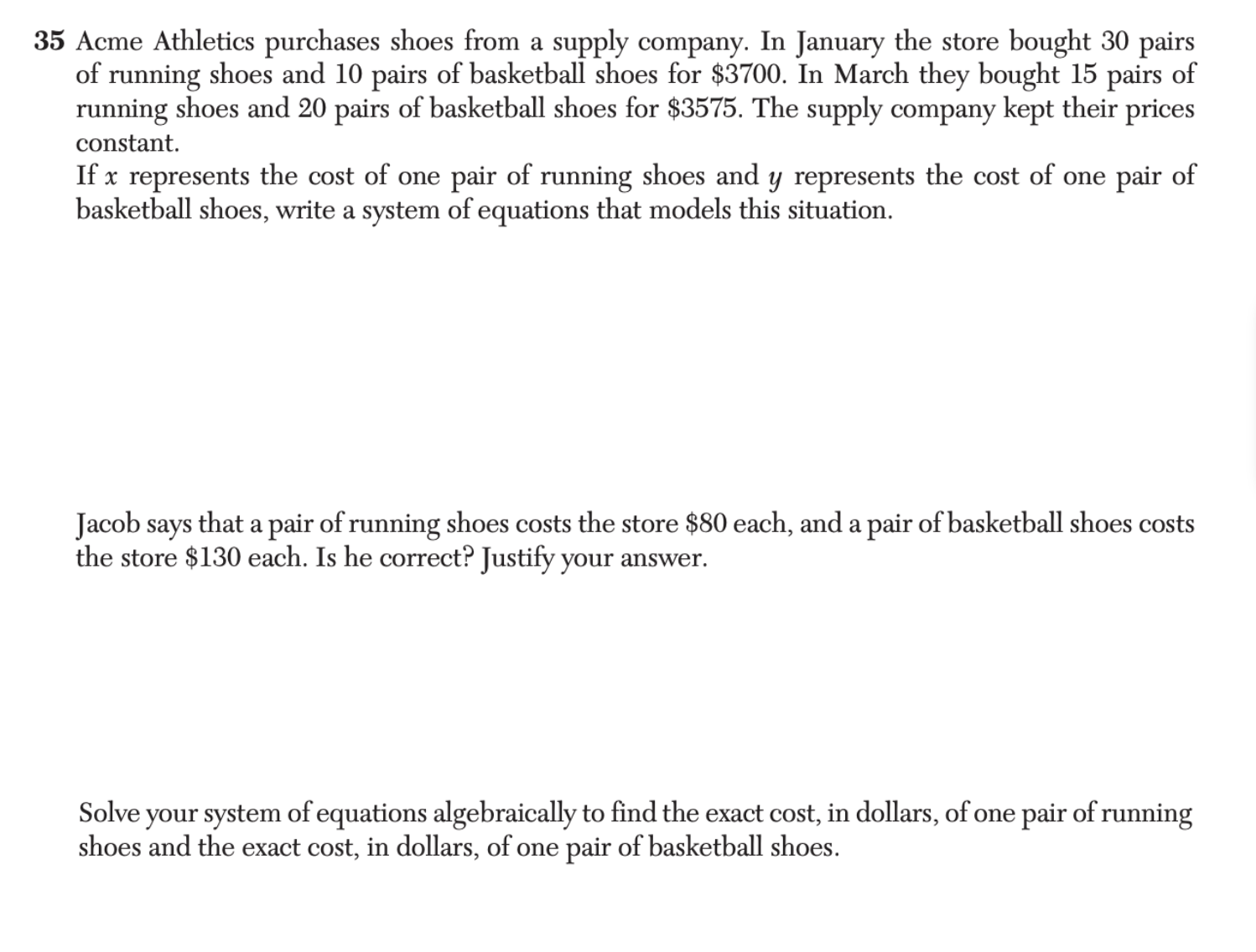
Create equations and linear inequalities in two variables to represent a real-world context.
A-CED.36 questions
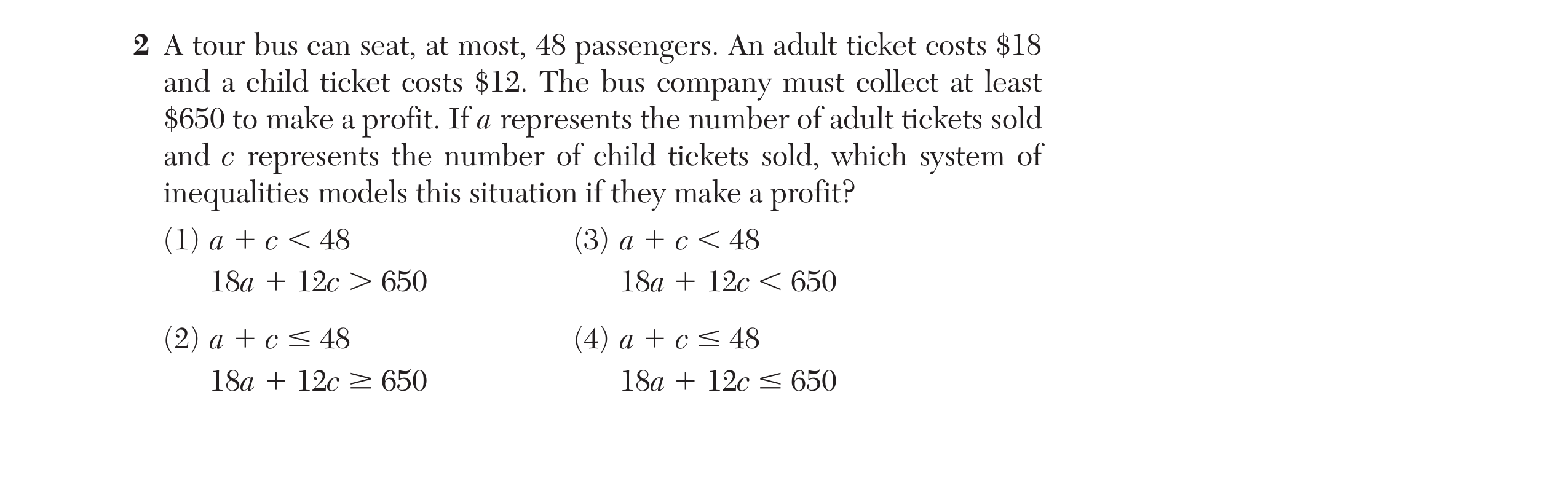
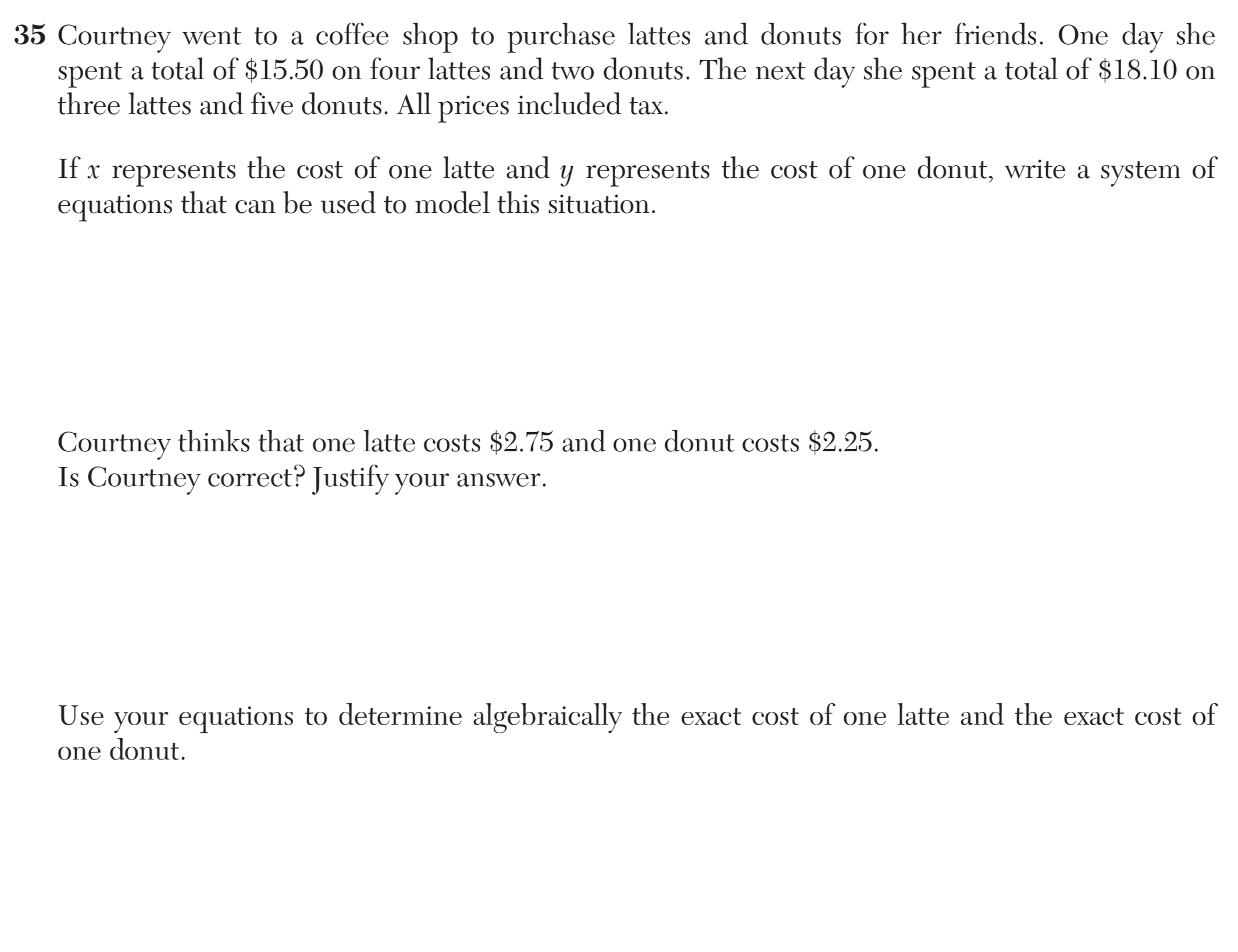
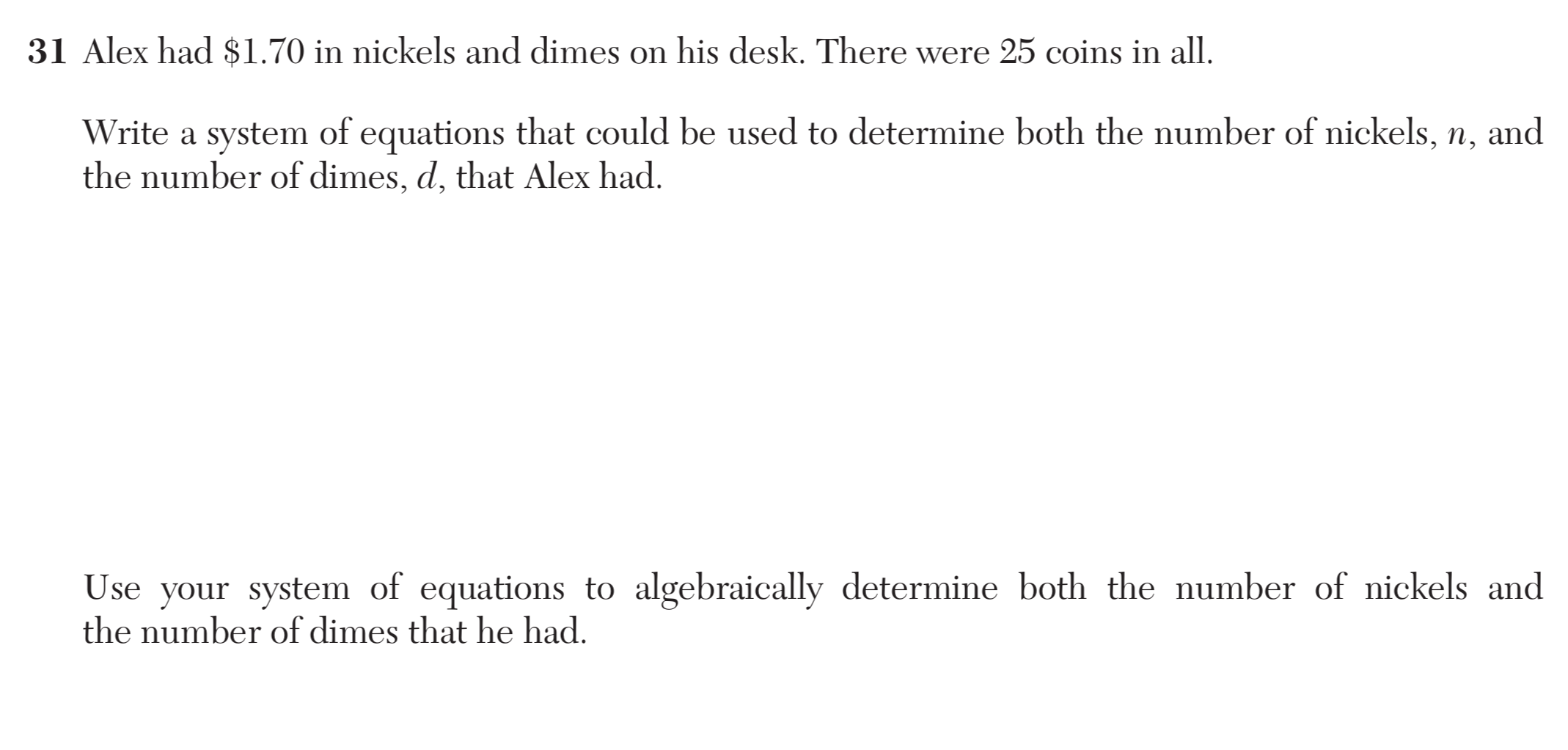
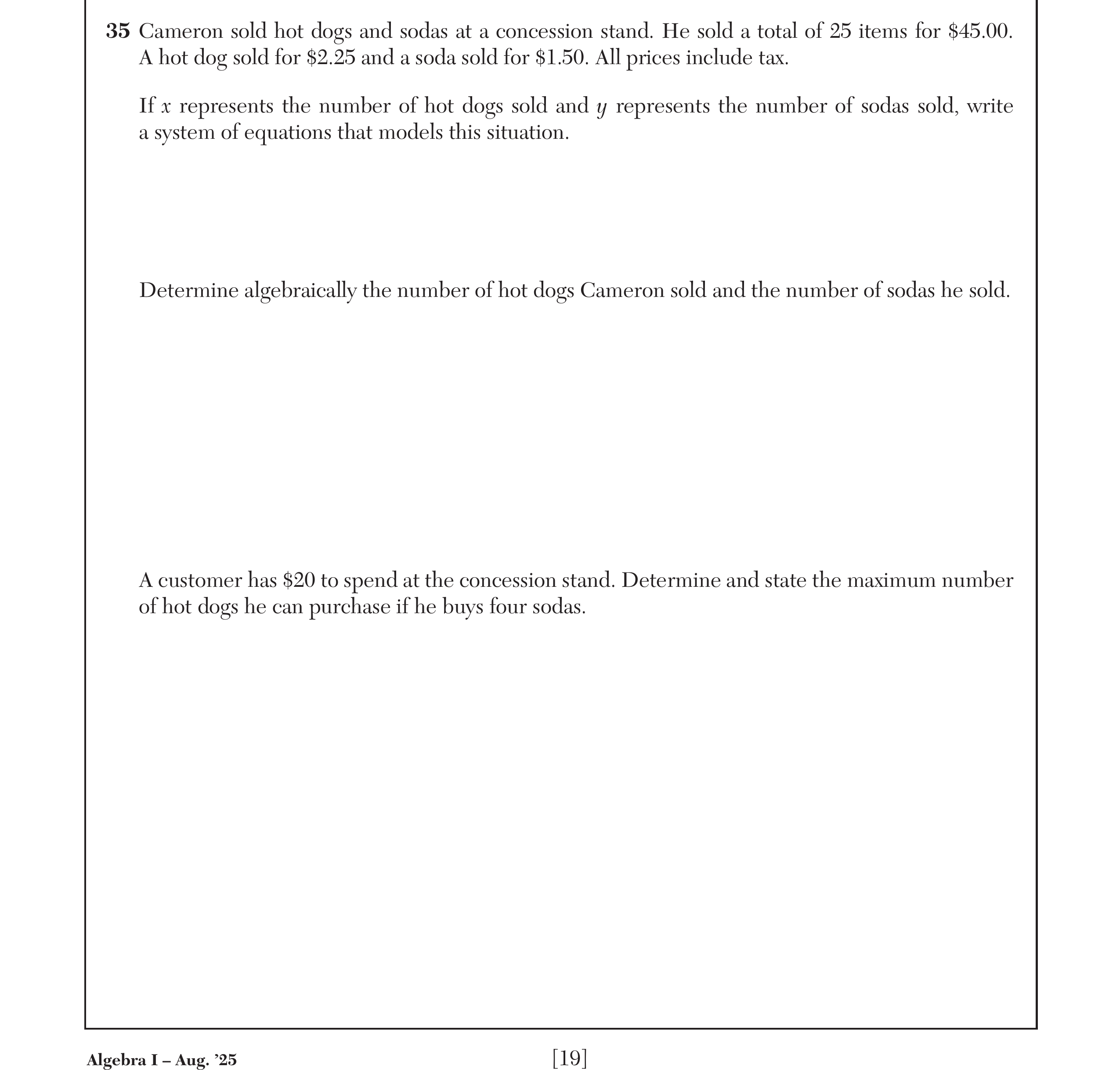
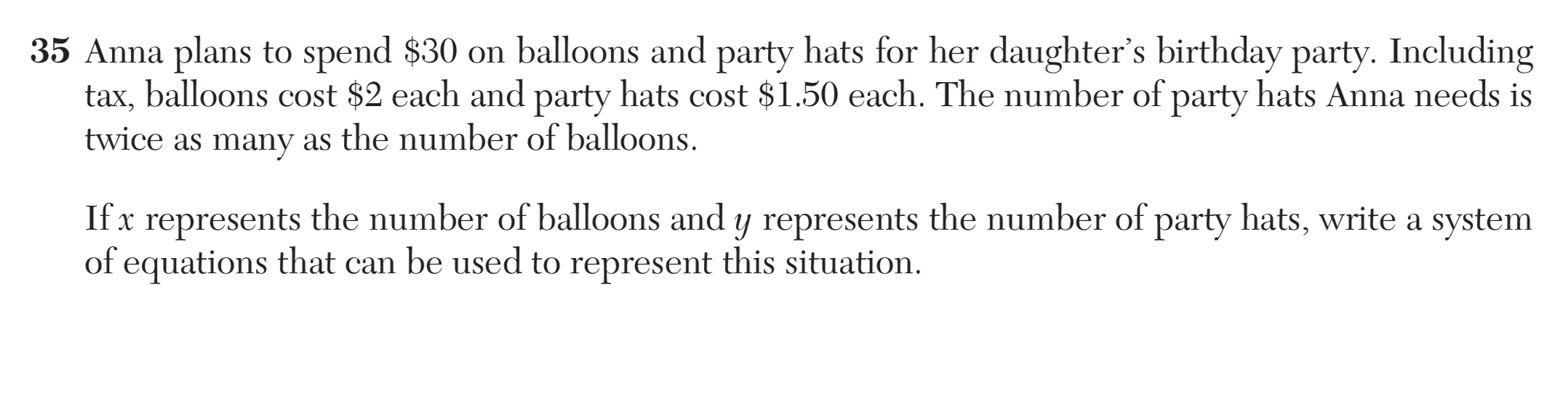
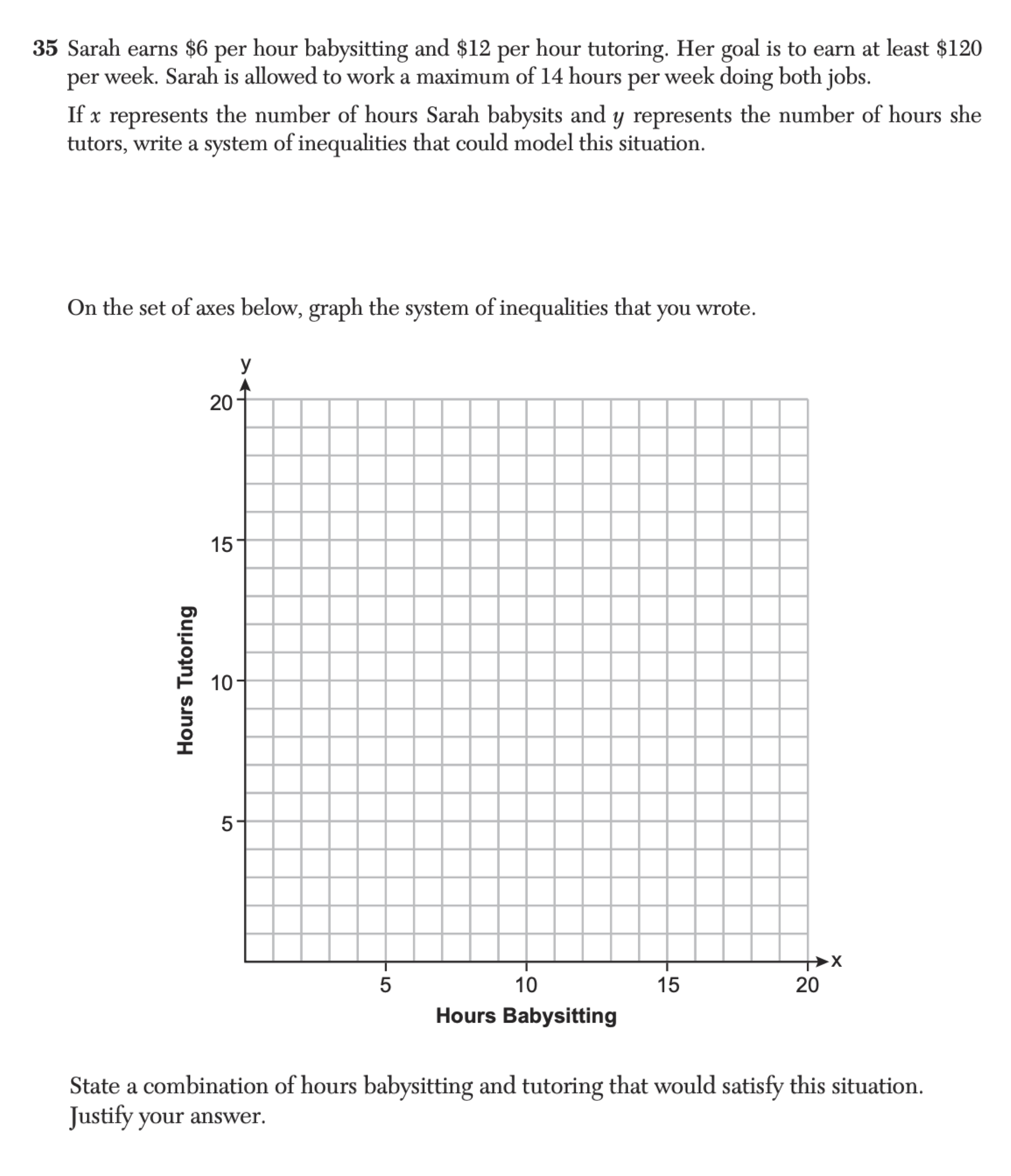
Represent constraints by equations or inequalities, and by systems of equations and/or inequalities, and interpret solutions as viable or non-viable options in a modeling context.
A-REI.108 questions
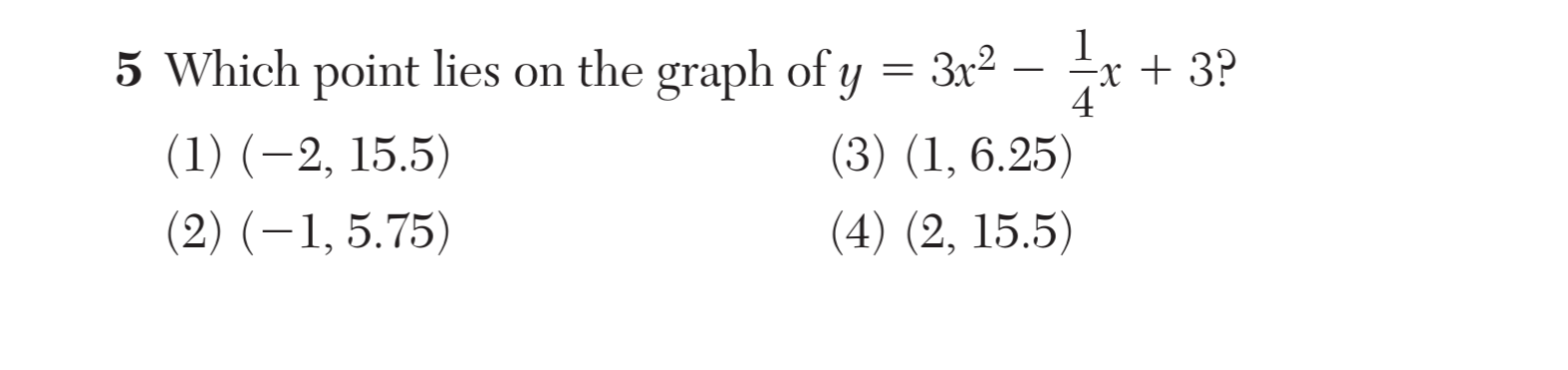
Understand that the graph of an equation in two variables is the set of all its solutions plotted in the coordinate plane.





F-IF.7.a
Graph functions and show key features of the graph by hand and by using technology where appropriate.