Completing the Square (Part 1)
Student Summary
Turning an expression into a perfect square can be a good way to solve a quadratic equation. Suppose we wanted to solve x2−14x+10=-30.
The expression on the left, x2−14x+10, is not a perfect square, but x2−14x+49 is a perfect square. Let’s transform that side of the equation into a perfect square (while keeping the equality of the two sides).
- One helpful way to start is by first moving the constant that is not a perfect square out of the way. Let’s subtract 10 from each side:
x2−14x+10−10x2−14x=-30−10=-40
- And then add 49 to each side:
x2−14x+49x2−14x+49=-40+49=9
- The left side is now a perfect square because it’s equivalent to (x−7)(x−7) or (x−7)2. Let’s rewrite it:
(x−7)2=9
- If a number squared is 9, the number has to be 3 or -3. Solve to finish up:
x−7=3x=10orx−7=-3orx=4
This method of solving quadratic equations is called completing the square. In general, perfect squares in standard form look like x2+bx+(2b)2, so to complete the square, take half of the coefficient of the linear term and square it.
In the example, half of -14 is -7, and (-7)2 is 49. We wanted to make the left side x2−14x+49. To keep the equation true and maintain equality of the two sides of the equation, we added 49 to each side.
Visual / Anchor Chart

Standards
A-SSE.29 questions
Recognize and use the structure of an expression to identify ways to rewrite it.
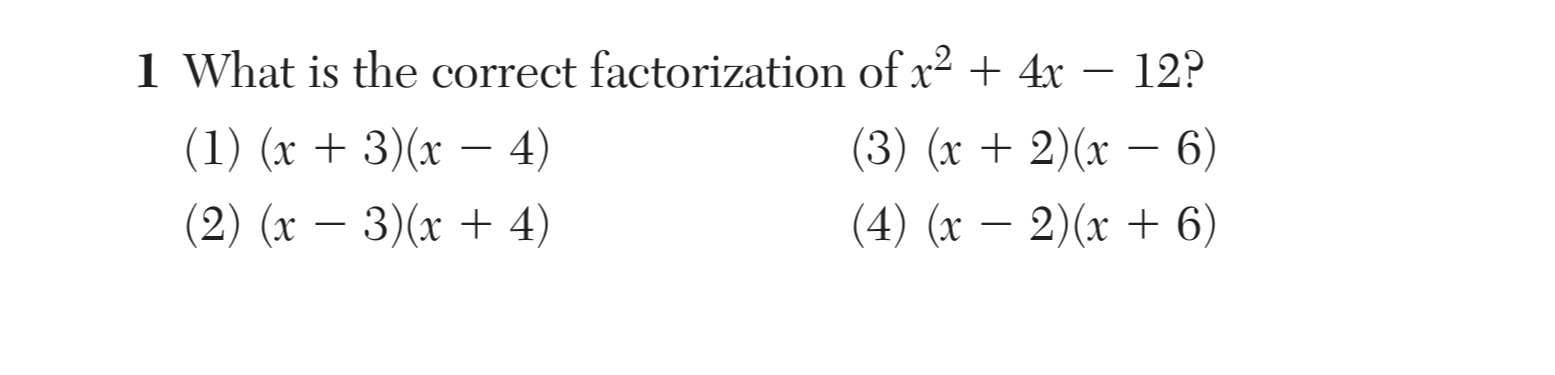

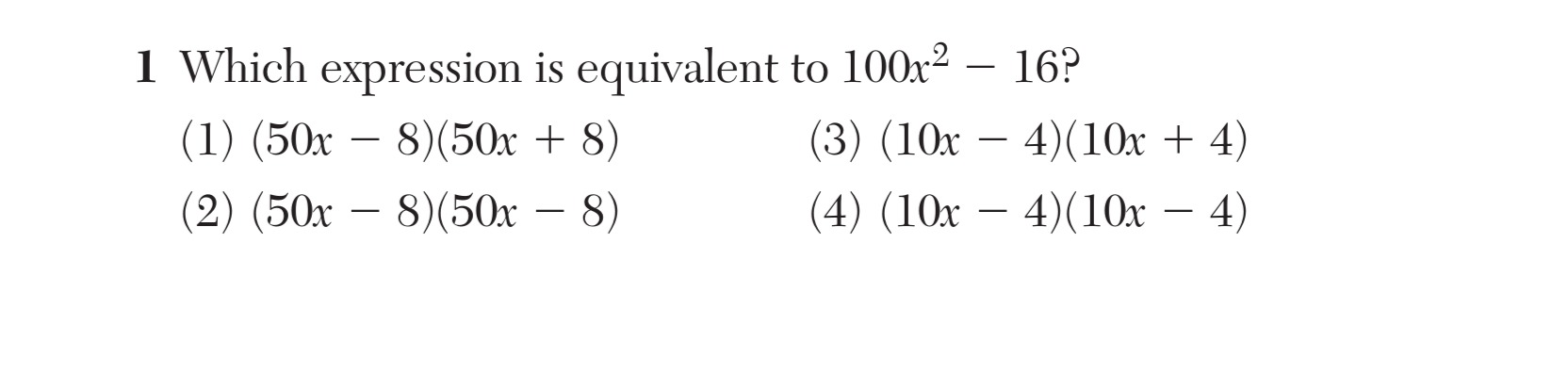
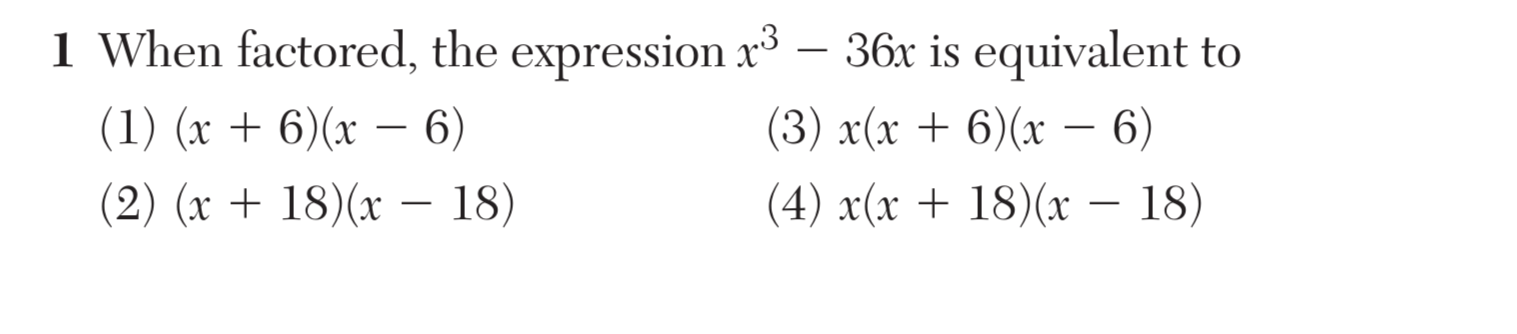
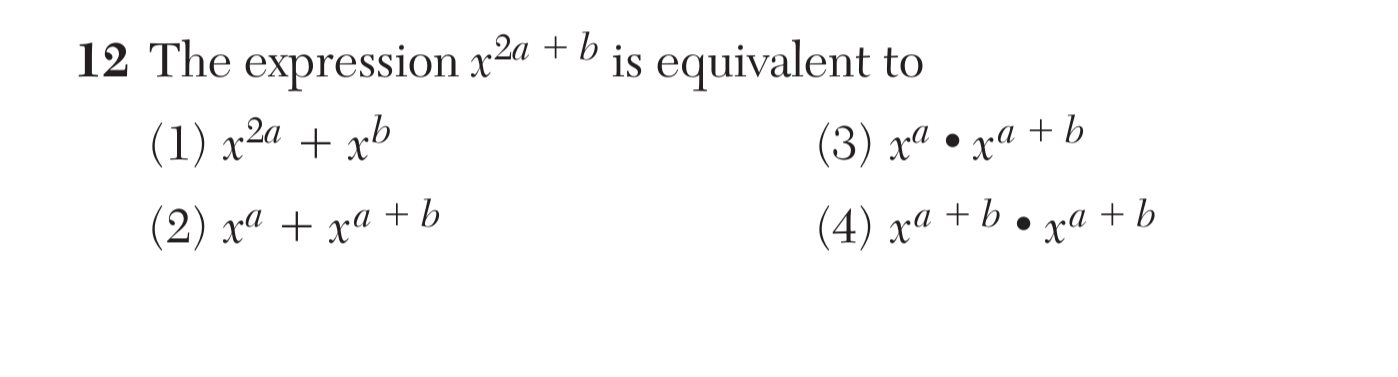


A-SSE.A
No additional information available.
A-REI.4.a
Solve quadratic equations in one variable.
A-REI.4.b
Solve quadratic equations in one variable.
A-REI.4.a
Solve quadratic equations in one variable.
A-REI.4.b
Solve quadratic equations in one variable.