Representing Situations with Inequalities

Student Summary

We have used equations and the equal sign to represent relationships and constraints in various situations. Not all relationships and constraints involve equality, however. 

In some situations, one quantity is, or needs to be, greater than or less than another. To describe these situations, we can use inequalities and symbols such as <,,><, \leq, >, or \geq.

When working with inequalities, it helps to remember what the symbol means, in words. For example:

  • 100<a100 < a means “100 is less than aa.” 
  • y55y \le 55 means “yy is less than or equal to 55,” or "yy is not more than 55."
  • 20>1820 > 18 means “20 is greater than 18.”
  • t40t \ge 40 means “tt is greater than or equal to 40,” or "tt is at least 40."

These inequalities are fairly straightforward. Each inequality states the relationship between two numbers (20>1820>18), or it describes the limit or boundary of a quantity in terms of a number (100<a></a></span>). </p> <p>Inequalities can also express relationships or constraints that are more complex. Here are some examples:</p> <div class="imgrid"> <div class="g--row"> <div class="g--column g--content g--three-fourth"> <ul> <li>The area of a rectangle, <span class="math">\(A, with a length of 4 meters and a width of ww meters is no more than 100 square meters.

A100A \leq 100
4w1004w\leq100

  • To cover all the expenses of a musical production each week, the number of weekday tickets sold, dd, and the number of weekend tickets sold, ss, must be greater than 4,000.

d+s>4,000d + s>4,000

  • Elena would like the number of hours she works in a week, hh, to be more than 5 but no more than 20.

​​​​​​​​​​​​h>5h>5
h20h \leq 20

  • The total cost, TT, of buying aa adult shirts and cc child shirts must be less than 150. Adult shirts are $12 each, and child shirts are $7 each.

T<150T<150
12a+7c<15012a + 7c < 150

In upcoming lessons, we’ll use inequalities to help us solve problems.

Visual / Anchor Chart

Standards

Building On
6.EE.5

Understand solving an equation or inequality as a process of answering a question: which values from a specified set, if any, make the equation or inequality true? Use substitution to determine whether a given number in a specified set makes an equation or inequality true.

7.EE.4

Use variables to represent quantities in a real-world or mathematical problem, and construct simple equations and inequalities to solve problems by reasoning about the quantities.

Addressing
A-CED.36 questions

Represent constraints by equations or inequalities, and by systems of equations and/or inequalities, and interpret solutions as viable or non-viable options in a modeling context.
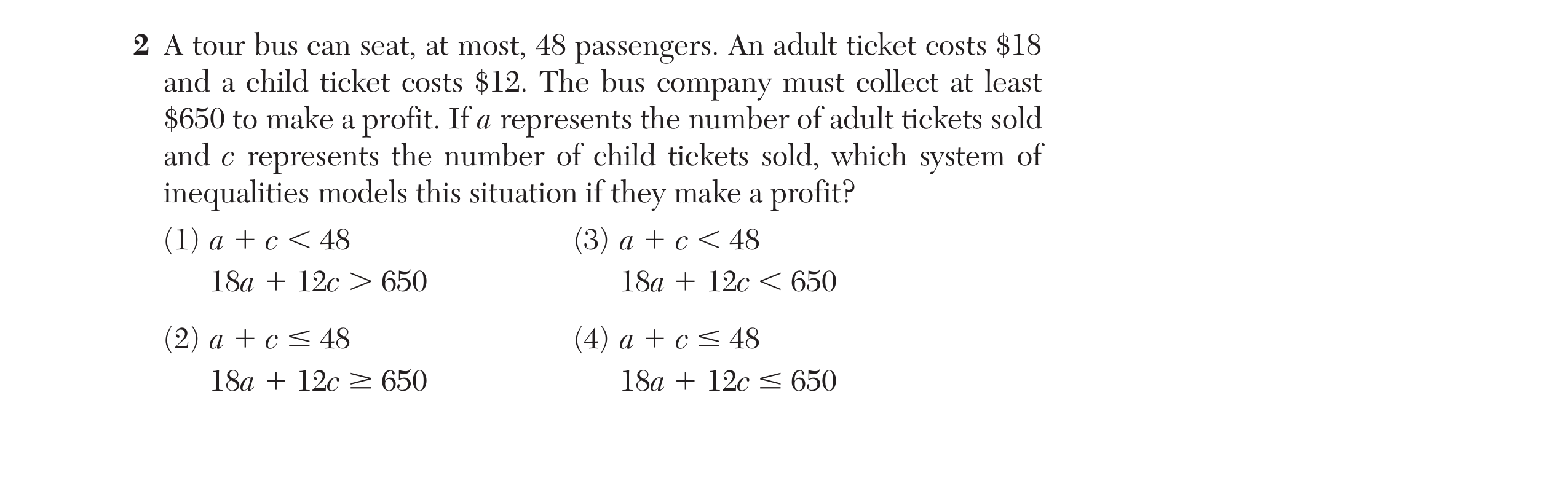
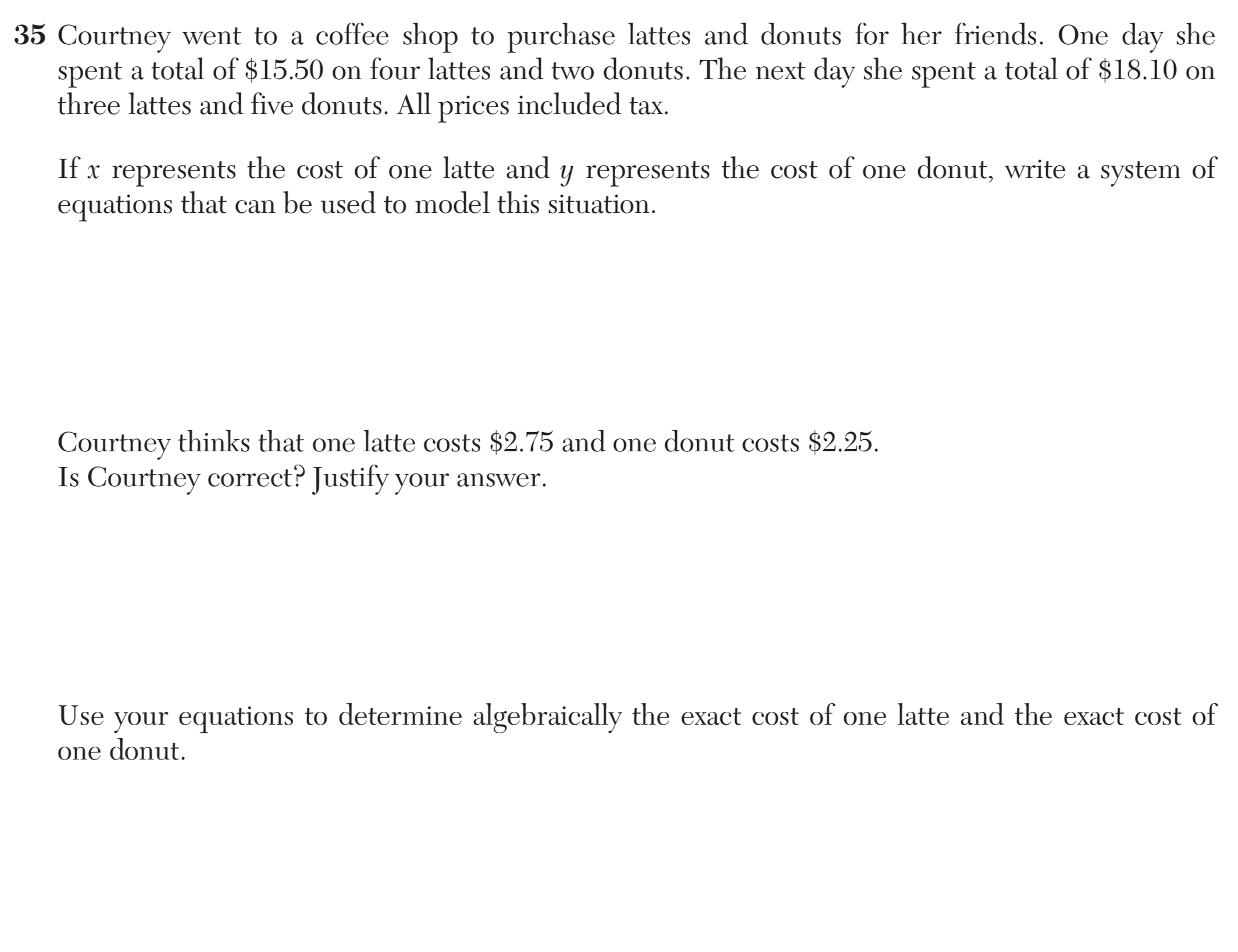
Q2 · 2ptJune 2024
Regents June 2024 Question 2
Q35 · 6ptJune 2024
Regents June 2024 Question 35
Q31 · 4ptJanuary 2025
Regents January 2025 Question 31
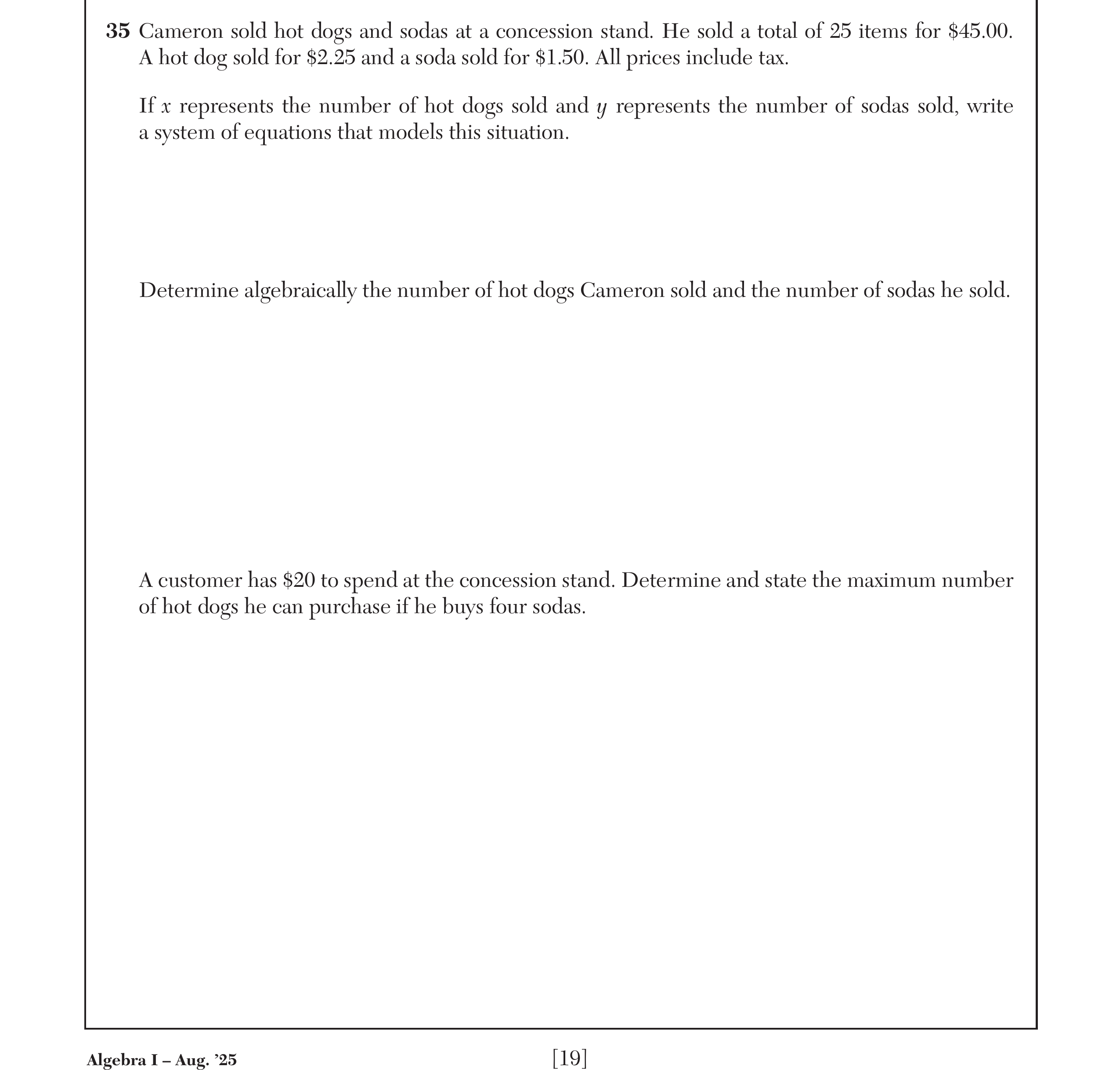
Q35 · 6ptAugust 2025
Regents August 2025 Question 35
Q35 · 6ptJanuary 2025
Regents January 2025 Question 35
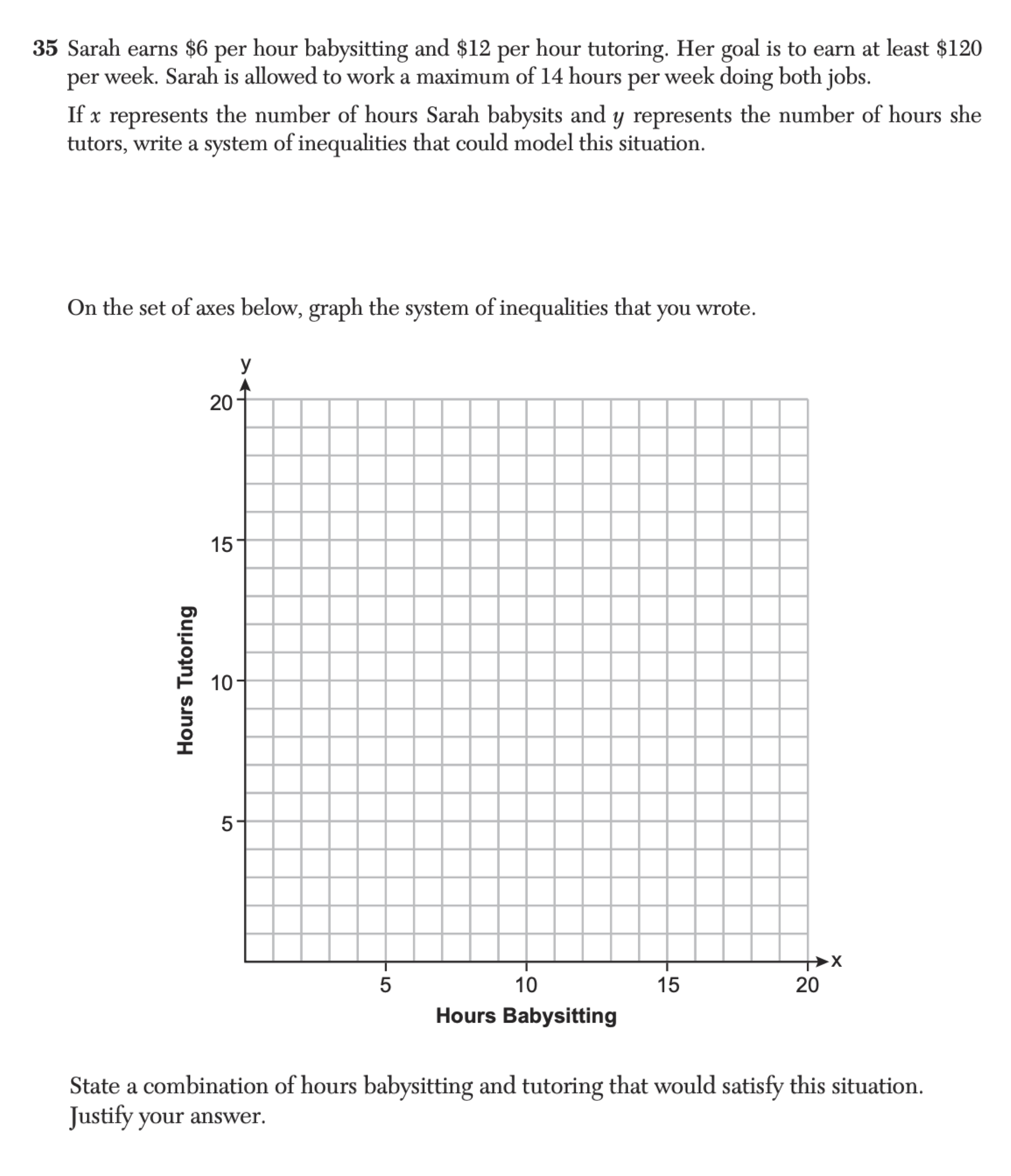
Q35 · 6ptJune 2025
Regents June 2025 Question 35
Building Toward
A-CED.36 questions

Represent constraints by equations or inequalities, and by systems of equations and/or inequalities, and interpret solutions as viable or non-viable options in a modeling context.
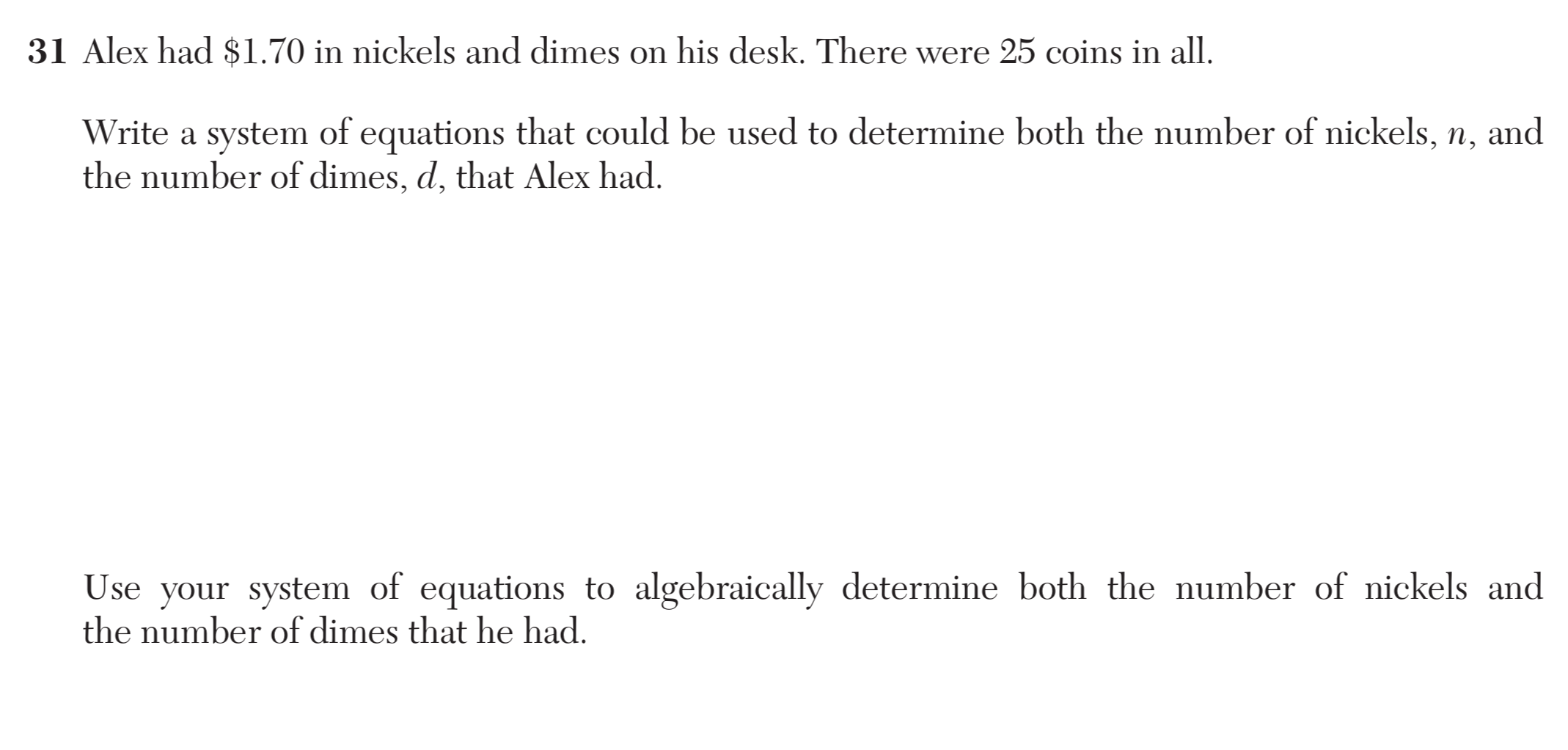
Q2 · 2ptJune 2024
Regents June 2024 Question 2
Q35 · 6ptJune 2024
Regents June 2024 Question 35
Q31 · 4ptJanuary 2025
Regents January 2025 Question 31
Q35 · 6ptAugust 2025
Regents August 2025 Question 35
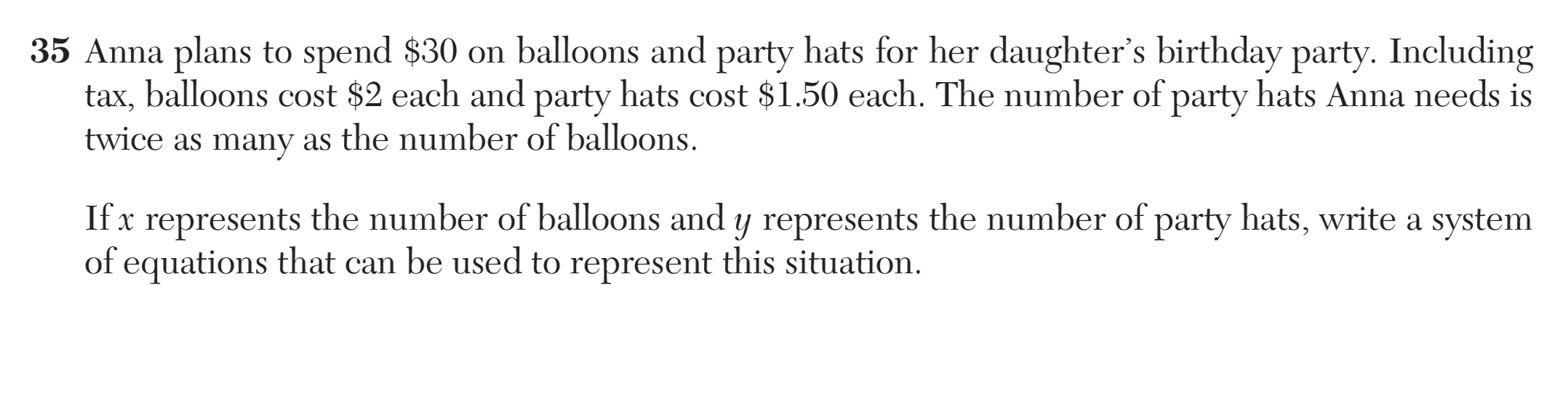
Q35 · 6ptJanuary 2025
Regents January 2025 Question 35
Q35 · 6ptJune 2025
Regents June 2025 Question 35
HSN-Q.A.2

No additional information available.