Expressed in Different Ways
Student Summary
Expressions can be written in different ways to highlight different aspects of a situation or to help us better understand what is happening. A growth rate tells us the percent change. As always, in percent change situations, it is important to know if the change is an increase or decrease. For example:
-
A population is increasing by 20% each year. The growth rate is 20%, so after one year, 0.2 times the population at the beginning of that year is being added. If the initial population is p, the new population is p+0.2p, which equals (1+0.2)p, or 1.2p.
-
A population is decreasing by 20% each year. The growth rate is -20%, so after one year, 0.2 times the population at the beginning of that year is being lost. If the initial population is p, the new population is p–0.2p, which equals (1–0.2)p, or 0.8p.
Suppose the area, a, covered by a forest is currently 50 square miles, and it is growing by 0.2% each year. If t represents time, from now, in years, we can express the area of the forest as:
a=50⋅(1+0.002)t
a=50⋅(1.002)t
In this situation, the growth rate is 0.002, and the growth factor is 1.002. Because 0.002 is such a small number, however, it may be difficult to tell from this function how quickly the forest is growing. We may find it more meaningful to measure the growth every decade or every century. There are 10 years in a decade, so to find the growth rate in decades, we can use the expression (1.002)10, which is approximately 1.02. This means a growth rate of about 2% per decade. Using d for time, in decades, the area of the forest can be expressed as:
a=50⋅((1+0.002)10)d
a≈50⋅(1.02)d
If we measure time in centuries, the growth rate is about 22% per century because 1.002100≈1.22. Using c to measure time, in centuries, our equation for area becomes:
a=50⋅((1+0.002)100)c
a≈50⋅(1.22)c
Visual / Anchor Chart

Standards
8.EE.1
Know and apply the properties of integer exponents to generate equivalent numerical expressions.
A-SSE.3.c
Choose and produce an equivalent form of an expression to reveal and explain properties of the quantity represented by the expression.
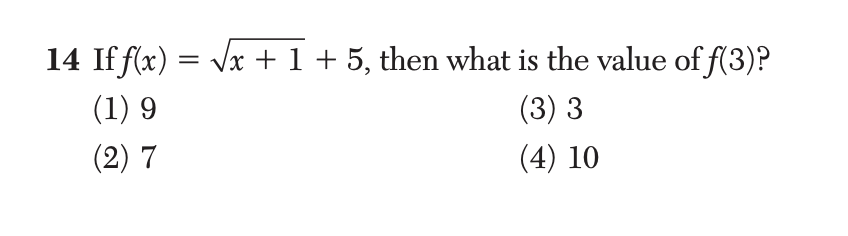
F-IF.25 questions
Use function notation, evaluate functions for inputs in their domains, and interpret statements that use function notation in terms of a context.




F-IF.81 question
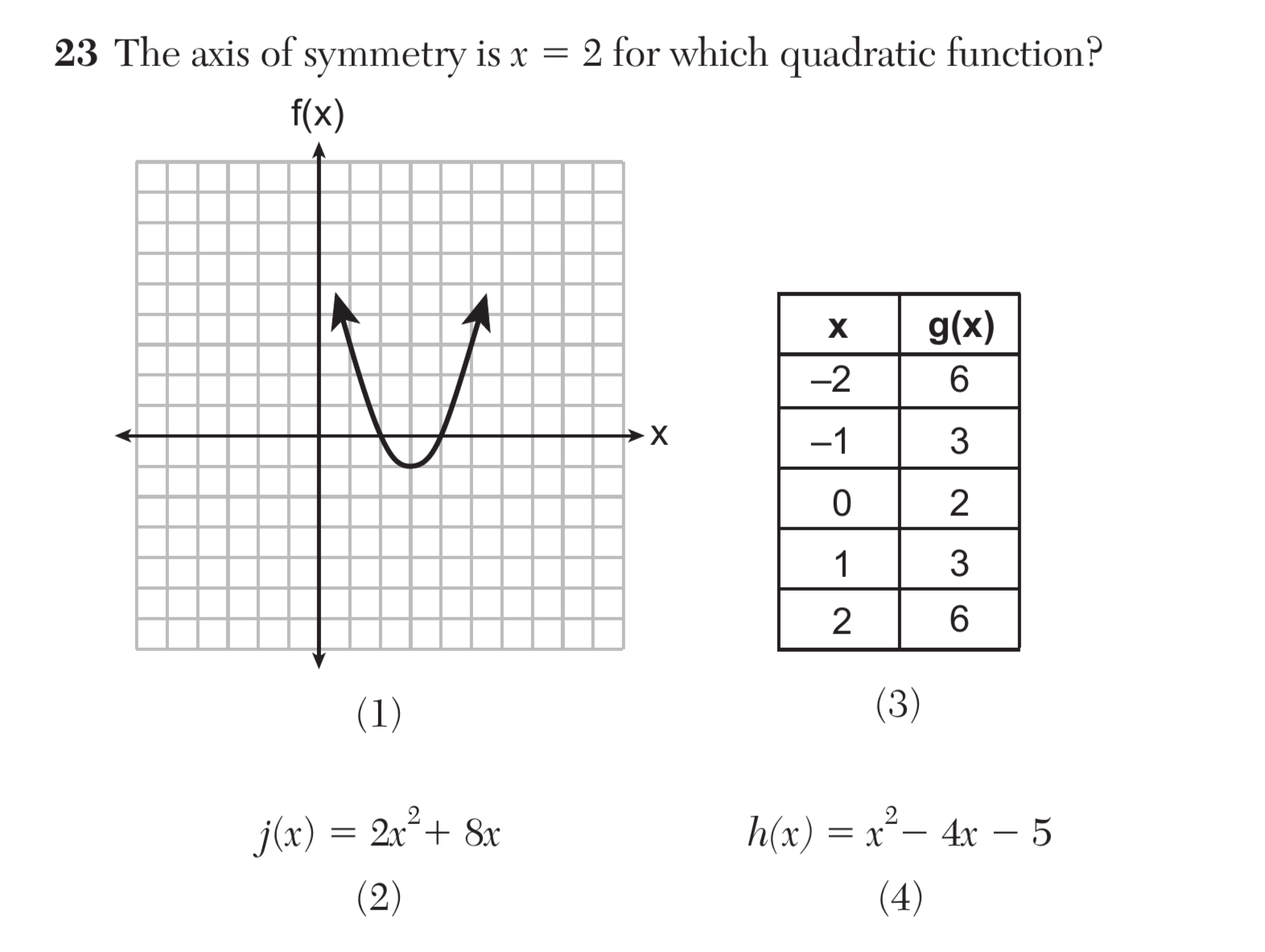
Write a function in different but equivalent forms to reveal and explain different properties of the function.
F-IF.8.b
Write a function in different but equivalent forms to reveal and explain different properties of the function.
A-SSE.1.b
Interpret expressions that represent a quantity in terms of its context.
F-IF.81 question
Write a function in different but equivalent forms to reveal and explain different properties of the function.